FireSale HackBoy

Knowledge Shared By FireSale HackBoy...

Hacking

The Art Of Exploitation...

Ethical Hacking

Security Experts...Same Techniques To Make Hacker's Stuff Useless.

Black Hat Hacking

Dark Side Of Hacking... In Short Destruction Of Cyber Stuff.

Digital Stuff

All The Digital Stuff Is Under The Influence Of Cyber Attacks... Be Safe

Showing posts with label Security. Show all posts

Sunday, May 18, 2025

Scam Messages and emails increase exponentially after M & S Cyber Attack

A recent cyberattack on Marks and Spencer (M&S) has raised significant concerns, revealing that hackers infiltrated the UK-based retailer’s systems almost a week before the breach was discovered. The attack, which was first detected a couple of weeks ago, exploited a vulnerability created by human error, compromising the personal data of nearly 9.4 million active customers.

Initial investigations suggest that while the hackers gained access to sensitive information, such as order histories, dates of birth, and some payment card details (excluding CVV numbers), they did not manage to steal complete payment card data. In fact, the retailer’s IT department clarified that only certain usable card information may have been exposed, but crucial security elements like CVVs remained protected.

CEO Stuart Machin reassured customers, explaining that although the breach might have disrupted online ordering, the hackers did not access full payment card details. He further emphasized that such data is not stored long-term on M&S servers, with archives holding payment information for a maximum of 24 hours. Machin expressed confidence that the company’s technical team would restore services by the end of the month.

The attack, attributed to the DragonForce ransomware gang, is having ripple effects beyond M&S’s digital operations. Many of the retailer’s physical stores across the UK are experiencing severe product shortages, as panic buying escalates among consumers. The gang behind the attack, believed to be affiliated with the Scattered Spider cybercriminal group, is demanding a ransom of $4 million. However, M&S has made it clear that it will not be entertaining these demands.

The impact of the breach has extended to customers, with some reporting an increase in spam calls and emails. These types of cyberattacks often result in data leaks that can fuel spam campaigns, as hackers may use the stolen information for targeted scams. Despite efforts by email providers and telecom companies to mitigate these issues, customers are urged to remain vigilant. They should avoid downloading any suspicious applications or software that could potentially carry malware.

As the situation unfolds, both M&S and its customers are left to contend with the aftermath of a costly and disruptive cyberattack.

The post Scam Messages and emails increase exponentially after M & S Cyber Attack first appeared on Cybersecurity Insiders.

The post Scam Messages and emails increase exponentially after M & S Cyber Attack appeared first on Cybersecurity Insiders.


May 19, 2025 at 10:37AM

Experts React: Coinbase Discloses Breach, Faces Up to $400 Million in Losses

Coinbase, one of the largest cryptocurrency exchanges, has disclosed a significant data breach that exposed sensitive customer information, including government-issued IDs. The attackers contacted Coinbase on May 11, demanding a $20 million ransom to prevent the public release of the stolen data.

The breach could result in losses of up to $400 million, depending on regulatory fines, legal actions, and customer compensation. Coinbase has launched an internal investigation and is cooperating with law enforcement. It has also notified affected customers and offered support.

The implications of the Coinbase breach are significant for crypto users and investors, spanning financial, regulatory, and trust-related concerns.

For crypto users, the risks are substantial. If government-issued IDs and personal data were stolen, users could face identity theft, phishing attacks, or SIM swapping. This could lead to unauthorized access to other financial accounts or crypto wallets. Users may lose confidence in Coinbase’s ability to protect their data, prompting them to move assets to other platforms or cold storage. Coinbase might implement stricter security protocols or temporarily limit certain services, affecting user experience. Affected users might be eligible for compensation or become part of class-action lawsuits.

For investors, the breach could lead to stock price volatility. Publicly traded companies like Coinbase (COIN) often see sharp stock price drops after breaches due to shaken investor confidence. The breach could trigger investigations by the SEC or other regulators, potentially leading to fines or new compliance requirements. Coinbase will likely need to invest heavily in cybersecurity upgrades, legal defense, and customer support. Long-term brand damage could reduce user acquisition and retention, impacting revenue growth.

David Stuart, Cybersecurity Evangelist at Sentra, commented on the breach, saying, “The Coinbase breach highlights the growing challenge of protecting sensitive customer data in highly interconnected digital ecosystems. Financial platforms, in particular, carry an outsized responsibility to safeguard personal and financial information against increasingly sophisticated threats. Full visibility into where sensitive data resides, how it moves, and who can access it is essential, especially as data spans cloud, SaaS, and third-party environments. Without continuous monitoring, access governance, and proactive risk management, even well-defended systems can become vulnerable. Organizations must prioritize a data-first security model that ensures sensitive information remains protected at every layer, beyond just perimeter defenses.”

Clyde Williamson, Senior Product Security Architect at Protegrity, added, “Coinbase says the affected customer base impacted in this attack is less than 1% of its 9.7 million customers to minimize the impact. That’s still around 1 million people whose sensitive information has been compromised, and the financial damage to Coinbase itself isn’t small. Malicious actors can do significant damage with your name and contact information; imagine what they’ll do with masked bank information and Social Security numbers. This attack was only possible because contractors and support personnel were allowed access to this information. This was an entirely avoidable situation on Coinbase’s part, and now they’re expecting the customers who trusted the organization with their highly sensitive information to perform damage control. It’s great that Coinbase was legally required to disclose this attack quickly, but those customers will be haunted by this breach. Disclosure without real action is data security’s ‘thoughts and prayers.’ Consumers deserve better than to live in constant fear of their data.”

The breach underscores the critical need for robust cybersecurity measures to protect sensitive customer information..


The post Experts React: Coinbase Discloses Breach, Faces Up to $400 Million in Losses first appeared on Cybersecurity Insiders.

The post Experts React: Coinbase Discloses Breach, Faces Up to $400 Million in Losses appeared first on Cybersecurity Insiders.


May 19, 2025 at 09:46AM

Mitigating Insider Threats and Zombie Accounts Amid Workforce and Contract Changes

The recent Twitter data leak, which exposed the personal information of 2.8 billion users, serves as a stark reminder of the vulnerabilities organizations face when disgruntled employees or contractors retain access to sensitive systems. This incident, suspected to be an insider job, underscores the critical importance of managing security and business risks potentially arising amidst workforce volatility. It is an especially important issue nowadays, as companies navigate massive layoffs and contract terminations.

When employees, contractors, or vendors leave an organization, their access to team services and applications must be promptly revoked. Failure to do so can leave “zombie” accounts — dormant accounts that remain active and act as security vulnerabilities. CISOs must always operate with a risk-aware mindset, assuming worst-case scenarios could happen and building policies, technologies, and processes to mitigate those risks.

Insider Threats from Disgruntled Employees

Disgruntled former employees can pose serious insider threats, including cybervandalism or selling their credentials to hackers. These risks extend beyond cybersecurity breaches to compliance liabilities under regulations such as SOX, GDPR, or HIPAA.

A notable example occurred in 2023 when two former Tesla employees leaked the personal data of tens of thousands of current and former employees to a German newspaper. Additionally, there is growing concern about disgruntled workforce potentially deploying AI agents or RPA bots within financially significant ERP systems to exfiltrate data or revenue to offshore bank accounts after their access is removed.

The Prevalence and Risks of Zombie Accounts

Moreover, dormant “zombie” accounts left enabled after termination are a common one attack vector for cyber criminals. Attackers may use brute-force attacks to guess passwords, hoping to find accounts lacking Multi-Factor Authentication (MFA), so that they can gain unauthorized access and start moving laterally within an organization’s systems. If successful, it is harder to detect attackers compromising accounts of former employees than existing ones.

The Verizon Data Breach Investigations Report 2024 highlights that the use of stolen credentials has appeared in almost one-third (31%) of all breaches over the past decade. For instance, last year, a hacker gained access to internal company tools using stolen credentials from a former employee at Tile, a leading Bluetooth location-tracking device vendor, breaching multiple systems and stealing sensitive data – a stark example of the severe consequences of delayed incident response in the case of a stale account compromise.

Identity Hygiene Measures

Proper identification of all human identities with access to an organization’s services and applications is crucial for assessing risk posture. This involves maintaining an inventory of applications, ideally sorted by risk to the organization, to facilitate the termination of access to these assets. These practices align with the NIST Cybersecurity Framework (CSF) 2.0’s “Identify” core function, which emphasizes the importance of understanding and managing cybersecurity risks.

Even with the above controls in place, organizations might still face increased security risks when offboarding a high volume of employees. As employees’ roles change throughout their careers, their access permissions might not be updated properly — especially for those who were granted elevated or emergency access that may not have been documented — increasing the risk of oversight during de-provisioning.

Best practice dictates that application account logins for terminated workforce members should be disabled in coordination with HR notifying the individual, and no later than 24 hours after notice. However, in modern enterprises where dozens—if not hundreds—of applications are in use, each potentially requiring separate credentials or permissions, oversights are not uncommon, exposing the organization to security risks. This risk is particularly high in companies lacking modern identity security and access governance automation.

Without automation, IT teams must manually revoke every access permission tied to each application, increasing the chance of human error, which might take weeks. With an automated identity governance solution, deprovisioning can be triggered by changes in an employee’s HR status. This ensures immediate and complete revocation of access, minimizing human error and reducing the deprovisioning time from weeks to just a couple of days—or even instantly.

Overall, identity hygiene best practices involve several stages on the path to mature identity governance. This starts with clear policies on how users are granted and maintain access to systems, progresses to basic automation for provisioning and access reviews, and culminates in application governance automation. The latter advanced approach enables automated provisioning by continuously monitoring the risk associated with access—both when it’s initially granted and during periodic reviews—and restricting it further through the use of emergency access management controls. With such an approach in place, massively offboarding people would become just another routine task for an organization.


The post Mitigating Insider Threats and Zombie Accounts Amid Workforce and Contract Changes first appeared on Cybersecurity Insiders.

The post Mitigating Insider Threats and Zombie Accounts Amid Workforce and Contract Changes appeared first on Cybersecurity Insiders.


May 19, 2025 at 08:21AM

Friday, May 16, 2025

Beyond the hype: The hidden security risks of AI agents and MCP

As AI rapidly evolves from a novelty to a necessity, businesses across every industry are feeling the pressure to integrate it into their operations, products, and services. What was once a forward-looking initiative has now become a critical component of staying competitive in a fast-changing market. 

AI experimentation is no longer driven by enthusiastic technologists or curious stakeholders—it’s now a strategic imperative. A significant component of this transformation is the use of AI agents: intelligent systems designed to autonomously perform tasks, make decisions, and adapt to changes in information.

Here, we’ll define what AI agents are, introduce MCP (Model Context Protocol), and dive into the security risks that come with these emerging technologies.

AI agents, defined: The brains behind autonomous applications

AI agents are applications where a Large Language Model (LLM) drives decisions, coordinates tasks, and adapts to changing inputs in real time.

A true shift occurs when AI agents are equipped with the tools and services they need to interact with the digital world. Whether it’s querying a database, sending a message, updating records, or triggering entire workflows, this tool access transforms AI into an autonomous process.

One of the most promising enablers of this evolution is the MCP. Introduced by Anthropic in November 2024, MCP is an open, emerging standard that simplifies how AI agents connect to tools and data sources. It’s earning widespread attention for doing what the USB standard did for hardware peripherals: replacing complex, one-off integrations with a universal interface.

By standardizing tool access, MCP empowers AI agents to execute dynamic, context-aware tasks across platforms. 

How does MCP work?

MCP uses a familiar client-server architecture to standardize how AI agents interact with external tools and data sources. This protocol ensures consistent and reliable communication between the agent and the resources it needs to function effectively.

This setup places MCP clients within the host application, whether that’s an AI assistant, a coding environment, or any other AI-enabled application. It performs the function of managing communication with an MCP server. As part of this process, the application and connected tools must negotiate protocol versions, discover available capabilities, and transmit requests and responses between them.

What makes MCP unique is that these capabilities are described in natural language, thereby allowing them to be directly accessed by the LLM driving the AI agent. This enables the model to understand which tools are available and how to use them effectively.

The server uses URI-based patterns to manage access to its resources and supports concurrent connections, enabling multiple clients to interact with it simultaneously. This makes the MCP highly scalable, flexible, and well-suited for complex agentic environments.

Autonomous vs. delegated identity: A crucial distinction

As AI systems become more embedded in business and everyday life, defining and managing AI identities is becoming increasingly important. Two key models are emerging: autonomous AI identity and delegated (on-behalf-of, or OBO) identity.

Autonomous AI identity refers to an agent that operates independently, making decisions and taking action without the intervention of a human in real time.

In contrast, a delegated identity represents an AI that performs tasks under the direction of a human. Understanding this distinction is crucial for maintaining proper accountability and security in AI-powered systems.

It is important to note that both models influence how authorization is managed by systems. A failure to differentiate these roles can result in over-permissioned systems, security risks, or misattribution of actions.

Visibility & control: The missing pieces

Real-time monitoring is essential for detecting and responding to anomalous behaviors in AI agents, especially as they operate autonomously and make decisions without human oversight. Just as important is robust identity management that clearly distinguishes between non-human identities (NHIs), which represent fully autonomous agents, and delegated identities, in which an agent acts on behalf of a human user.

Tagging each action with the correct identity context allows security teams to enforce least-privilege access, audit agent behavior against user delegations, and maintain clear accountability. Furthermore, tool-specific audit trails provide detailed records of every API call, data access, and action performed by an AI agent. As a result, these logs are essential for forensic investigations and compliance audits and should be integrated with existing SIEM systems to correlate agent activity across environments and detect suspicious activity.

As protocols like MCP expand tool integration capabilities, security frameworks must evolve in parallel, introducing dynamic authorization, continuous monitoring, and adaptive policy enforcement to manage increasingly capable agents. The combination of detailed audit trails and identity-aware monitoring will be critical to maintaining control, visibility, and trust as AI agents become more embedded in core operations.

Prepare now for secure AI adoption

As MCP rapidly gains traction as a standardized framework for integrating AI models with external tools and data sources, it’s reshaping how AI systems interact with applications. This unlocks more dynamic and context-aware capabilities. The rapid adoption of this technology, however, has outpaced the development of mature security controls, exposing potential risks such as unauthorized access, data leakage, and compromised tool integrity.

To address these concerns, organizations are encouraged to take proactive steps:

  • Audit current MCP usage or plans: Assess how MCP is currently implemented within your systems or how it’s planned to be integrated.
  • Enhance visibility and standardize authentication: Implement standardized authentication protocols and ensure comprehensive identity tracking to monitor interactions between AI models and external tools.
  • Foster collaboration between engineering and security teams: Encourage cross-functional teams to work together in developing and enforcing security policies tailored to MCP implementations.

Securing the future of AI agents

The use of AI agents is unlocking unprecedented efficiency and intelligence across applications – automating tasks, streamlining workflows, and enabling real-time decision making. But with any rapid advancement comes risk. 

To stay ahead of emerging threats, prioritize auditing MCP deployments and implement standardized authentication protocols to establish a secure baseline. Then build a comprehensive AI identity security strategy by leveraging third-party security tools to protect your systems as agents grow more autonomous and deeply integrated into core business operations.

Remember that security isn’t static—it must evolve with your AI stack.


The post Beyond the hype: The hidden security risks of AI agents and MCP first appeared on Cybersecurity Insiders.

The post Beyond the hype: The hidden security risks of AI agents and MCP appeared first on Cybersecurity Insiders.


May 17, 2025 at 10:27AM

Ransomware attacks on education sector go unreported for months

Countries like the United Kingdom, the United States, Australia, and Canada have established cyber laws that require organizations affected by ransomware attacks to report these incidents within a specific time frame. These mandatory reporting windows typically range between 48 to 72 hours, depending on the country’s regulatory framework. The aim is to ensure transparency, facilitate timely responses, and protect stakeholders from further harm.

However, a recent study by Comparitech reveals a troubling trend in the U.S. education sector. On average, educational institutions across America take approximately 4.8 months to publicly disclose data breaches resulting from ransomware attacks. In some extreme cases, schools have waited as long as six months before reporting the breach or notifying affected individuals about the compromise of their personal data.

What’s more alarming is that many of these incidents only come to light when stolen data appears for sale on the dark web. In other words, rather than being proactive, many institutions remain silent until external parties expose the breach.

A notable example of this occurred at the end of last year, when a significant ransomware attack targeted PowerSchool software—widely used by school districts for managing student information. The attack affected over 100 school districts, as hackers managed to infiltrate and encrypt critical servers. Yet, details of the breach only surfaced publicly once the compromised data began circulating in underground cybercrime markets.

This pattern of delayed disclosure not only raises serious ethical and legal questions but also puts students, parents, and educators at heightened risk of identity theft, fraud, and other cyber-related harms.

The post Ransomware attacks on education sector go unreported for months first appeared on Cybersecurity Insiders.

The post Ransomware attacks on education sector go unreported for months appeared first on Cybersecurity Insiders.


May 16, 2025 at 08:47PM

Dior likely hit by ransomware attack

In a concerning development, Dior, the iconic French luxury fashion brand, has reportedly been targeted by a cyber attack that appears to be a form of ransomware. According to the latest updates, hackers seem to have gained unauthorized access to the company’s internal servers, potentially compromising a range of sensitive customer information. While the full extent of the breach is still under investigation, initial reports suggest that the attack is linked to a file-encrypting malware, a type of ransomware where malicious actors lock away critical data until a ransom is paid.

The Data Breach: What Was Compromised?

The breach is believed to have exposed various personal details of customers, although fortunately, no financial information related to either customers or employees has been leaked, which is a somewhat reassuring piece of news from a cybersecurity perspective. However, the compromised data includes names, gender details, mobile phone numbers, email addresses, postal addresses, and purchase history. In addition, fashion preferences—categorized by gender and age—were also part of the exposed data.

This kind of information can be highly valuable to cybercriminals, who may use it for a variety of malicious purposes. One of the primary concerns is that this data could potentially be exploited in targeted phishing attacks. Customers might receive fraudulent emails or messages designed to trick them into revealing even more personal or financial details.

Dior’s Response and Investigation

In response to the breach, Dior has swiftly implemented various security measures to prevent the malware from spreading further within its network. The company’s IT teams are currently conducting an in-depth investigation to identify the exact nature of the intrusion and to ensure that no further data loss occurs. While the situation is still developing, Dior has promised to keep the public informed with regular updates as the investigation progresses.

For now, Dior is urging its customers to remain vigilant and monitor their financial transactions closely. The company has issued a warning that individuals may be at a higher risk of falling victim to phishing scams in the coming months. This advisory is expected to remain in effect for the next 6 to 12 months, as the stolen data could be used in a variety of nefarious ways, including crafting personalized phishing schemes.

A Broader Cybersecurity Concern

This breach is not an isolated incident. Last month, several major retail brands in the UK, including Marks & Spencer, Co-Op, and Harrods, were also targeted by a cybercriminal group known as the “Scattered Spider” gang, which is believed to be behind the DragonForce ransomware attacks. The growing frequency of these types of incidents highlights a disturbing trend in the retail sector, where hackers are increasingly focusing on stealing personal data from consumers.

While Dior has not yet confirmed whether a ransomware attack specifically was involved, the company has promised to provide further updates as the investigation unfolds. The absence of financial data in the breach is a slight silver lining, but the loss of personal details, especially sensitive information such as shopping preferences, can still be damaging. It’s worth noting that marketing and advertising firms could also leverage this data to build detailed customer profiles, which could lead to more targeted (and potentially intrusive) marketing campaigns in the future.

Moving Forward: Precautionary Measures

As Dior continues to assess the damage and work toward securing its systems, customers are urged to take a proactive approach to their online security. It’s a good practice to review your bank and credit card statements regularly, and be cautious when receiving unsolicited emails or messages, especially those that ask for personal information or contain links to unknown websites.

In an increasingly digital world, incidents like this remind us all of the importance of maintaining robust cybersecurity measures and staying alert to potential online threats.

The post Dior likely hit by ransomware attack first appeared on Cybersecurity Insiders.

The post Dior likely hit by ransomware attack appeared first on Cybersecurity Insiders.


May 16, 2025 at 11:37AM

Thursday, May 15, 2025

AI Governance Is Your Competitive Edge If You Treat It That Way

For years, we’ve watched technology initiatives stumble not because they failed to innovate, but because they failed to govern. Now, with artificial intelligence reshaping industries at breakneck speed, many organizations are falling into the same trap: rushing ahead with AI initiatives without building the governance foundations needed to sustain them.

The mistake? Treating AI governance like a compliance checkbox. Too often, organizations bolt it on after models are built, when it should have been embedded from day one. This approach turns governance into a bottleneck instead of a business enabler. By the time issues like bias, security gaps, or explainability failures surface, it’s too late and expensive to unwind.

I’ve seen what happens when governance is an afterthought. In a previous engagement, a financial services company rolled out an algorithmic lending platform with minimal oversight. Early indicators were promising: faster decisions, operational efficiency, and positive buzz across the business. But without strong governance, especially in how training data was sourced and decisions were justified, things quickly unraveled. Auditors uncovered biased outcomes disproportionately affecting specific demographic groups. The company was forced to pull the product from production, launch a costly investigation and remediation effort, and face significant regulatory scrutiny. Trust, once lost, proved hard to regain.

In contrast, I worked with a healthcare organization that treated governance as a strategic imperative from day one. Their approach was comprehensive. Cross-functional teams, diverse review boards, transparent documentation, and adversarial testing protocols were all in place before the first AI model went live. When they launched a diagnostic tool, it wasn’t just technically sound—it was trusted. Regulators engaged early. Physicians felt confident using it. Patients understood its purpose. Governance didn’t slow them down. It cleared the path for faster deployment and broader adoption.

Red Teams Belong at the Governance Table

Too many governance frameworks exist only on paper. They outline principles but never validate how those principles hold up under real-world pressure. That’s where offensive security plays a vital role. Red-teaming and adversarial testing are not optional. They are essential to making AI governance operational.

Offensive security helps stress-test assumptions, uncover hidden attack surfaces, and expose misuse scenarios that may not be evident in controlled development environments. By simulating adversarial behavior, red teams can validate that AI guardrails function as intended—not just under ideal conditions, but when systems are manipulated, misused, or operating at their limits. This transforms governance from a theoretical exercise into a practical, pressure-tested foundation.

We’ve seen red teaming shift how organizations think about AI resilience. It introduces failure modes early, creates more realistic threat models, and drives cross-functional conversations that strengthen policy, technical, and ethical safeguards. In mature organizations, offensive testing is not reserved for the final stage of deployment. It is woven into the lifecycle of every model.

Data First, AI Second

Another common misstep is starting AI governance at the model level instead of the data layer. Data is the raw material of every AI system, and yet many organizations pursue model governance without first ensuring the privacy, integrity, and security of the data feeding those models. This backward approach leads to weak foundations and hard-to-detect failures.

A strong AI governance strategy is, first and foremost, a data governance strategy. It requires full visibility into data sources, clear policies around consent and anonymization, and robust access controls to prevent leakage or misuse. Without this, even the most sophisticated AI frameworks are vulnerable to bias, drift, and exploitation.

Embed It Early or Pay for It Later

For security and product leaders who want to get ahead of these risks, the time to act is now. And the steps are clear:

  • Establish decision rights and accountability structures for AI systems before development begins.
  • Form cross-functional governance teams that include technical, legal, ethical, and business perspectives.
  • Define governance metrics that tie directly to business outcomes, not just compliance requirements.
  • Build governance into existing product workflows instead of bolting on additional processes.
  • Invest in documentation and explainability tools from the start.
  • Create monitoring systems that continuously evaluate model behavior in real-world conditions.

These actions don’t just reduce risk. They accelerate execution. When governance is built in, not bolted on, it becomes a driver of speed, clarity, and confidence.

Governance as a Growth Lever

The most successful AI programs don’t treat governance as friction. They treat it as fuel. When done right, governance provides the blueprint for faster innovation, the clarity regulators demand, and the transparency that customers expect. It creates trust, and trust is what ultimately differentiates companies in an increasingly AI-driven economy.

Governance enables scale. It helps organizations avoid the cycle of rework, remediation, and reputational repair. It allows them to launch with confidence and adapt responsibly when models change. In industries where the cost of failure is high—finance, healthcare, critical infrastructure—that kind of resilience is not just valuable. It is essential.

In an environment where AI is the new battleground for competitive advantage, governance is your edge if you choose to use it that way.


The post AI Governance Is Your Competitive Edge If You Treat It That Way first appeared on Cybersecurity Insiders.

The post AI Governance Is Your Competitive Edge If You Treat It That Way appeared first on Cybersecurity Insiders.


May 16, 2025 at 07:53AM

Insider Threat fetches $400m loss to Coinbase

Coinbase, one of the leading cryptocurrency exchanges in the United States, has been the target of a significant cyber attack, potentially leading to losses ranging from $180 million to $400 million in the current financial year. This forecast comes from the exchange itself, after conducting an analysis of the incident’s immediate and long-term impacts, including the drop in the company’s share value by approximately 3%.

According to information obtained by Cybersecurity Insiders, the breach appears to have stemmed from an insider threat. A trusted individual within the company gathered sensitive information and passed it along to external actors. On May 11, 2025, the hackers launched their attack, claiming to have gained access to a small portion of Coinbase’s data. This data reportedly included personal details of customers and employees, such as names, email addresses, and home addresses.

The scope of the attack is particularly concerning as the cybercriminals employed advanced phishing tactics to trick Coinbase users into transferring part of their cryptocurrency holdings to fraudulent accounts. Victims of the attack believed they were responding to legitimate requests, only to realize too late that they had been deceived by the attackers’ sophisticated methods.

Upon discovering the breach, Coinbase’s incident response team acted swiftly. They immediately reset all server account passwords and initiated a process to reimburse customers who had unknowingly transferred their funds to the fraudulent accounts. The company also launched an investigation into the insider threat, which was traced back to freelance employees working for Coinbase outside of the United States. These individuals were promptly terminated.

Currently, Coinbase is focused on restoring the affected accounts and reinforcing its security protocols to prevent further incidents. The company has made it clear that it will not comply with the $20 million ransom demand made by the attackers, maintaining its stance of not paying out to cybercriminals. In a move to encourage public cooperation, Coinbase has also announced a reward of up to $20 million for anyone who provides information that leads to the identification and capture of the attackers.

This attack appears to be a variant of ransomware, in which data was siphoned off without the encryption typically seen in traditional ransomware attacks. Notably, Coinbase has emphasized that its servers were not encrypted during the breach, which may offer insight into the nature of the attack.

The broader impact of such cyber incidents is evident, as crypto exchanges have become frequent targets for cybercriminals. According to Chainalysis, cryptocurrency exchanges suffered a staggering $2.2 billion in losses from cyberattacks in 2024. The trend is expected to continue, with predictions suggesting that losses could increase by 25% in 2025, further highlighting the increasing risks in the crypto industry.

The post Insider Threat fetches $400m loss to Coinbase first appeared on Cybersecurity Insiders.

The post Insider Threat fetches $400m loss to Coinbase appeared first on Cybersecurity Insiders.


May 15, 2025 at 08:31PM

Wednesday, May 14, 2025

Google warns of US retail cyber attacks and M & S insurance payout to cost £100m

Google Issues Warning to U.S. Retailers About the Growing Threat of Scattered Spider Cyberattacks

Google’s Threat Intelligence team has issued an urgent warning for U.S. retail businesses, cautioning that they could soon become targets of a highly sophisticated cybercriminal group known as Scattered Spider. This group is suspected of being behind a series of major cyberattacks in the United Kingdom, including attacks on well-known retailers such as Harrods, Co-Op, and Marks & Spencer, which saw the deployment of DragonForce ransomware.

In partnership with Mandiant, a cybersecurity company owned by Google, the tech giant has forecast that these attacks could begin as early as September of this year. With this timeline in mind, Google is urging all businesses, regardless of their size, to take proactive measures to safeguard themselves against potential cyber risks, which could result in significant disruptions and financial losses.

Scattered Spider’s Operations

Scattered Spider, also known by its alias UNC3944, is a well-organized and highly skilled group of cybercriminals that has gained notoriety for its ability to carry out large-scale ransomware campaigns. Their most recent wave of attacks, which primarily targeted major UK-based retailers, has raised concerns that they might now set their sights on U.S. retail companies, given the similarities in the modus operandi and the group’s growing capabilities.

John Hultquist, Chief Analyst at Google Threat Intelligence, confirmed that the group is likely planning to expand its operations into the U.S., targeting retail businesses. As a result, organizations in the retail sector should remain on high alert for any suspicious activity or indications of a potential cyberattack.

How Mandiant Can Help

To assist organizations in strengthening their defenses, Mandiant has made available a free guide—a playbook designed to help businesses assess and bolster their cybersecurity strategies. This playbook provides detailed, actionable recommendations for mitigating the risks associated with advanced persistent threats, such as those posed by Scattered Spider. Businesses are strongly encouraged to leverage this resource, as it could significantly improve their ability to detect and respond to cyberattacks before they can cause widespread damage.

Marks & Spencer to File £100 Million Claim Following Cyberattack

In related news, British retailer Marks & Spencer, which was recently hit by a devastating DragonForce ransomware attack linked to Scattered Spider, is now preparing to file an insurance claim estimated at £100 million to cover its recovery costs. The company has confirmed that the attack resulted in a combination of direct financial losses, order cancellations, and potential long-term damage to its brand reputation, especially in relation to the safety of customer data.

The Impact of the Attack

The cyberattack on Marks & Spencer forced the company to temporarily shut down several of its operations, resulting in significant operational disruptions. Not only did this lead to immediate financial losses, but the cancellation of orders and the ongoing uncertainty surrounding the safety of customer data has likely harmed the retailer’s trust with consumers. As a result, the company is now seeking reimbursement through its insurance policy to cover the damages incurred.

However, the payout on such an insurance claim is not guaranteed, as it depends on several factors. For instance, insurance companies often assess the preparedness of a company’s IT infrastructure before offering coverage. If Marks & Spencer, for example, had not implemented sufficient cybersecurity measures to prevent such an attack, its claim might be partially or entirely denied, or only reimbursed for certain types of damages.

Understanding Cyber Insurance and Premium Risks

For companies considering cybersecurity insurance, there are several important considerations to keep in mind. First, most insurance providers assess an organization’s preparedness for cyberattacks when determining the premiums and coverage limits. These assessments often involve examining the company’s existing cybersecurity measures, its in-house talent, and its overall resilience to cyber threats.

Moreover, even if Marks & Spencer successfully receives an insurance payout, it may face higher premiums in the future, as cyber insurance providers adjust their pricing models in response to the increasing frequency and severity of cyberattacks. In fact, some insurers are starting to exclude specific types of cyber risks, like ransomware attacks and distributed denial-of-service (DDoS) attacks, from their coverage policies altogether.

This trend is prompting many CIOs (Chief Information Officers) and CTOs (Chief Technology Officers) to reconsider their approach to cyber insurance. As premiums rise and coverage options shrink, organizations will need to carefully evaluate their risks and decide whether to invest in higher-level protection or adjust their coverage to account for evolving cyber threats.

A Call for Vigilance in the Retail Sector

The growing threat from groups like Scattered Spider highlights the importance of cybersecurity across all industries, but particularly in retail, where customer data and financial transactions are prime targets for cybercriminals. As cyberattacks become more sophisticated and more frequent, it is essential for organizations to invest in both proactive and reactive measures to protect their systems and data.

For now, retailers must take action to bolster their defenses and ensure they have adequate insurance coverage to mitigate the financial impact of potential breaches. As Google and Mandiant have emphasized, staying ahead of the curve is crucial—especially with the knowledge that the next wave of attacks could be just around the corner.

The post Google warns of US retail cyber attacks and M & S insurance payout to cost £100m first appeared on Cybersecurity Insiders.

The post Google warns of US retail cyber attacks and M & S insurance payout to cost £100m appeared first on Cybersecurity Insiders.


May 15, 2025 at 10:44AM

Data Protection Market: Endless Possibilities to Ensure a Secure Future

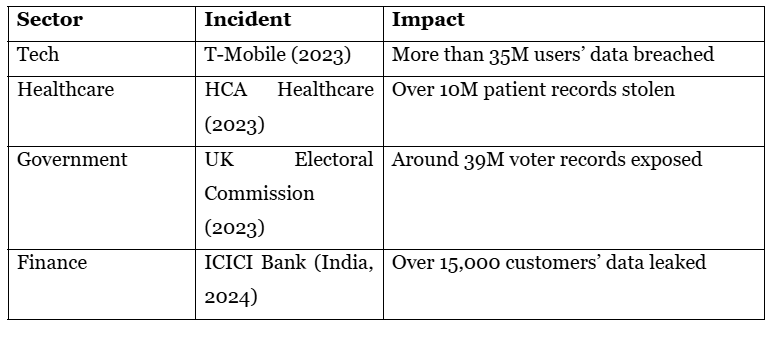
Do you know that the average cost of a data breach is expected to reach over USD 4 million by the end of 2025, having already reached around USD 4.86 million globally in 2024. Data leaks and cyberattacks have increased in frequency, affecting more than 342 million people in 2023. Here are a few recent data breach cases in prominent fields.

Thus, in the modern world, data protection becomes crucial to protect individual rights, foster trust in digital interactions, and preserve personal integrity. According to Research Nester’s analysis, the market for data protection is expected to reach USD 1.12 trillion by 2037, up from USD 158.77 billion in 2024. The need for data protection and recovery, the increased organizational awareness of data integrity, and increasing cybersecurity threats are some important factors that will support the growth of the global data protection market. Further, in this blog post, let’s explore evolving trends and identify future opportunities in the data protection market.

1.Growth of Remote Work Culture and Bring Your Own Device (BYOD) Policies

As of March 2025, more than 35 million Americans, or around 21% of all employees, worked remotely to some extent. Due to the growing accessibility of technology and the recognition that working remotely can be more effective and efficient, the workforce is increasingly moving toward remote arrangements. As a result, strong data protection measures are required as remote workers have long been viewed by hackers as weak points in their attempts to access systems and steal data. For instance, in 2023, the average cost of a data breach was around USD 5 million, and breaches related to remote work cost an extra USD 173,073 on average per occurrence. Moreover, fostering a culture of security and compliance in remote work situations is crucial since remote work presents a wide range of cybersecurity challenges.

2.Adoption of Zero Trust Architecture (ZTA)

Zero Trust is an integrated, proactive strategy that offers quick improvements in security controls and risk mitigation. To improve cybersecurity and preserve the integrity of federal agency networks, organizations are increasingly using ZTA in response to the growing prevalence of remote work, cloud computing, and sophisticated cyber threats. Small and medium-sized businesses (SMBs) are exposed to a growing range of security vulnerabilities, making ZTA an essential strategy to protect SMBs. For instance, SMBs were the target of over 60% of cyberattacks in 2023. In fact, in 2023, about 94% of cybersecurity events that affect SMBs cost between USD 825 and USD 653,586. 

3.Shift to Cloud Computing

According to the European Commission, in 2023, 45.2% of EU businesses purchased cloud computing services, primarily for office software, electronic file storage, and email system hosting. Moreover, by the end of 2025, more than 90% of all businesses globally will rely on cloud computing services to support their operations, around 13% in 2020. This shift has necessitated robust data protection strategies as it also introduces the risk of data breaches. For instance, data stored on the cloud was the cause of over 75% of data breaches in 2023, making the cloud a susceptible area. This is further boosting spending on cloud security to protect cloud-based systems from changing cyber threats, illegal access, and data breaches. 

4.Presence of Stringent Data Privacy Laws

Almost all nations have passed some kind of data privacy legislation to safely shield data from breaches, illegal access, and online dangers. Businesses that prioritize data privacy should adhere to legal requirements, protect assets, build trust, and promote sustainability. With rising concerns over data breaches, countries around the world are doubling down on data privacy regulations. Let’s look at how several nations are emphasizing data privacy laws.

  1. The Indian Parliament passed the Digital Personal Data Protection (DPDP) Act, 20236, at the beginning of August 2023, which is the country’s first data protection law. The fines for breaking the DPDP Act can range from around ₹49 crore to over ₹240 crore for each infraction.
  2. Under the California Privacy Rights Act (CPRA), the state government of California established the California Privacy Protection Agency (CPPA) to strengthen consumer data rights while informing customers by encouraging openness, enforcement, and education. For a single CCPA violation, civil penalties can vary from over USD 2400 to USD 7400.
  3. The General Data Protection Regulation (GDPR) went into force throughout the European Union on May 25, 2018, impacting any organization that handles the data of people who reside in EU member states. Those that break the GDPR’s privacy and security rules might face severe fines of around 9 million euros, or over 1% of a company’s global yearly turnover from the prior year, whichever is higher.

In a Nutshell,

Every business should place a high premium on data protection to maintain the confidentiality and integrity of the data. As a result of increased rules, technical improvements, and an increasing emphasis on individual rights and control, data privacy is set to undergo major change in the future. Towards the end, the global data protection market is poised for significant growth in the evolving cybersecurity landscape.

Source: https://ift.tt/m0HPJL3 


The post Data Protection Market: Endless Possibilities to Ensure a Secure Future first appeared on Cybersecurity Insiders.

The post Data Protection Market: Endless Possibilities to Ensure a Secure Future appeared first on Cybersecurity Insiders.


May 15, 2025 at 08:06AM

The End of VPNs — Part 1: Why Reachability is the New Risk

[Part 1 of 2 – Based on an interview with Zscaler CSO Deepen Desai]

By Holger Schulze, Cybersecurity Insiders

The 2025 RSA Conference floor was buzzing earlier this month—every booth promising maximum security, every vendor claiming AI. But when I sat down with Deepen Desai in a quieter room to talk about secure access, he cut straight to the point: 

“VPNs are exposed by design,” he said. “And anything exposed is exploitable.”

Desai is the Chief Security Officer at Zscaler. He leads ThreatLabz, one of the most recognized research teams in cloud security. His team had just released the 2025 VPN Risk Report, an unflinching assessment of how legacy remote access infrastructure is failing the modern enterprise.

The numbers alone signal a turning point:

  • 65% of organizations plan to eliminate VPNs within 12 months
  • 81% are moving toward a Zero Trust architecture
  • 92% are concerned that unpatched VPNs will lead to ransomware attacks

But those numbers weren’t the headline. The real story was what Desai said next.

“The problem with VPNs isn’t misconfiguration. It’s that they work exactly as designed—by placing users on the network. That’s the flaw.”

From Access to Attack Surface – The Blast Radius Is the Network

For years, VPNs served as the default answer to remote access. They were familiar, deployable, and “secure enough.” But the world they were built for no longer exists. And in today’s hybrid work and cloud-first environment, that familiarity is dangerous as they create tunnels from users into internal environments: because once authenticated, VPNs grant network-level access.

“VPNs don’t connect you to an application,” Desai explained. “They put you on the network—and once you’re there, the entire routing table is fair game.”

Between 2020 and 2025, Zscaler ThreatLabz tracked over 400 CVEs tied to VPN appliances as reported by the MITRE CVE Program. In 2024 alone, 60% of new VPN vulnerabilities were rated high or critical. These flaws allowed attackers to bypass authentication, execute code remotely, or hijack sessions outright. And the adversaries aren’t waiting around. 

And as Desai pointed out, attackers are often exploiting them faster than vendors can patch.

“We’ve seen ransomware groups reverse-engineer VPN vendor patches within hours of release,” he said. “They don’t need to wait for the next zero-day exploit. They just need to watch the update notes.”

Once inside, VPNs offer no built-in segmentation. No identity-aware access. No containment. 

We’ve seen this play out repeatedly. In the past 24 months, attacks targeting Citrix, Pulse Secure, and Ivanti VPNs forced urgent patch cycles, major outages, and—in at least one case— U.S. federal agencies were ordered to physically disconnect appliances to prevent a breach.

“When a government agency tells you to unplug your VPN device,” Desai said, “that’s not a security advisory. That’s an obituary.”

The Breach Blueprint: Four Stages of Exploitation

What makes VPNs so dangerous today is not just that they’re reachable—it’s what they enable after compromise. Desai broke it down like a blueprint, because that’s exactly how attackers see it:

  1. Find an exposed VPN endpoint—scan the internet or query an LLM trained on CVE metadata.
  2. Compromise the device—via credentials, phishing, or a known exploit.
  3. Move laterally—because VPNs place you on the internal network with broad access.
  4. Exfiltrate or encrypt—steal data or detonate ransomware.

“If your device is compromised,” Desai warned, “the blast radius is everything your VPN can reach on the network. And with most VPNs, that’s a lot.”

AI Is Changing the Rules—and Breaking the Old Model

Desai also emphasized that attackers aren’t just adapting to old defenses. They’re automating past them.

“We’re already seeing threat actors use AI to scale reconnaissance,” he said. “They use GPT models to query CVE databases, plan attacks, and generate working exploits faster than most teams can patch.”

In this new era, attackers no longer need weeks of manual research. They can run 1,000 automated scans, find the exposed systems, and strike—at scale.

“They don’t care about an 80% failure rate,” Desai added. “If 20 out of 100 attacks succeed, they win. But we can’t operate that way. We have to defend everything.”

And while defenders have AI too—risk scoring, anomaly detection, automated policy generation—Desai made it clear that defensive AI only works when the architecture is simplified.

“Use AI to fight AI,” he said. “But don’t rely on AI to clean up after a broken access model. You need Zero Trust first—because if your infrastructure is reachable, you’ve already lost.”

This is where Zero Trust does more than reduce risk. It removes visibility. It denies entry. It breaks the attacker’s playbook before they press ‘Enter.’

The Quiet Cost: Normalized Fragility, Institutional Risk

Desai’s view isn’t just about external threats. He pointed to what he called the “quiet failure” of VPNs: the day-to-day cost they impose on IT, security, and end users.

“We’ve normalized the fragility,” he told me. “Dropped sessions, sluggish performance, endless helpdesk tickets—it’s all seen as just the price of remote work. But it doesn’t have to be that way.”

According to the VPN risk report:

  • 54% of teams say VPNs are a recurring source of outages or support escalations
  • 41% call VPN maintenance a major drain on internal resources
  • 51% of users report degraded application performance
  • 23% say slowdowns directly impact their productivity

The problem isn’t just the VPN tunnel. It’s the architecture around it—one that demands constant patching, exposes public IPs, and assumes any authenticated user is trustworthy enough to be on the network.

“Security teams are stuck patching appliances,” Desai said. “Helpdesk teams are buried in tickets. Meanwhile, attackers are using AI to scale recon. It’s not a fair fight.”

Inheriting Risk: Third-Party and M&A Exposure

There’s another failure mode that Desai considers just as dangerous—and far less visible: VPNs as backdoors for third-party risk.

“If your contractors connect over VPN, you’re not just exposing your apps,” he said. “You’re inheriting whatever vulnerabilities exist in their environments.”

In one 2024 incident cited in the report, a financial services firm suffered a breach after attackers exploited a third-party VPN connection, exposing data from nearly 20,000 clients.

And the risk is amplified during mergers and acquisitions.

“Attackers monitor the news,” Desai said. “When an acquisition is announced, they target the smaller company. It’s lean, underprotected, and usually connected by VPN to the parent. That’s the bridge—and no one’s watching it.”

What Happens When the VPN Is Gone

So what does life after VPN actually look like?

Desai offered a clear example: ManpowerGroup, a global enterprise with over 30,000 users, fully transitioned from traditional VPN to Zscaler Private Access (ZPA)—in just 18 days.

The impact wasn’t just faster logins or simplified administration. It was architectural.

  • No exposed IP addresses
  • No lateral network access
  • 97% reduction in helpdesk tickets related to remote access
  • Application access based on identity and policy—not network level routing

“When you eliminate the idea of being ‘on the network,’” Desai said, “you eliminate the attacker’s playground.”

Coming Next: The End of VPNs —Beyond the Buzz of Zero Trust

In Part 2 of this series, we’ll go deeper into how Zero Trust replaces VPNs—not just in branding, but in architecture. We’ll walk through how Zscaler applies Zero Trust in practice, why identity—not subnet—is the new perimeter, and how organizations are using app-segmentation and deception to stop lateral movement before it starts.

Because the future of secure access isn’t about building safer tunnels. It’s about removing the need for VPN tunnels altogether.

The post The End of VPNs — Part 1: Why Reachability is the New Risk first appeared on Cybersecurity Insiders.

The post The End of VPNs — Part 1: Why Reachability is the New Risk appeared first on Cybersecurity Insiders.


May 15, 2025 at 03:34AM

INE Security Alert: Continuous CVE Practice Closes Critical Gap Between Vulnerability Alerts and Effective Defense

Cary, North Carolina, May 14th, 2025, CyberNewsWire

INE Security, a global leader in hands-on cybersecurity training and certifications, today highlighted how ongoing real-world practice with the latest CVEs (Common Vulnerabilities and Exposures) is essential for transforming security teams from reactive to proactive defenders.

With over 26,000 new CVEs documented in the past year, security teams are drowning in vulnerability alerts while facing exploit windows that have compressed to hours in many cases.

“Reading CVE bulletins is not the same as knowing how to stop the attack,” said Dara Warn, CEO at INE Security. “Our Skill Dive platform gives practitioners hands-on experience with real vulnerabilities in contained environments, cutting incident response times when these same issues hit production. This practical approach delivers far more value than traditional security certifications alone.”

Skill Dive is INE Security’s risk-free technical environment featuring exclusive labs not found in learning paths and courses. Skill Dive’s Vulnerabilities Lab Collection offers a continuously updated library of labs specifically designed to provide hands-on practice with actual CVEs, allowing security practitioners, including those preparing for pentester certifications, to experience both the exploitation and mitigation of current real-world threats in a safe environment.

CVEs: From Bulletin to Defense

CVEs are the standard identifiers for known vulnerabilities, but many security teams struggle to implement effective mitigations at scale, even those with Sec+ and other entry-level certifications.

Common challenges include:

  • Risk prioritization across hundreds of monthly CVEs
  • Testing mitigations without impacting production
  • Adapting defenses to diverse system configurations
  • Building response muscle memory that works under pressure
  • Getting ahead of the threat curve instead of constantly reacting

Practice Today’s Threats. Prevent Tomorrow’s Breaches.

INE Security’s Skill Dive Vulnerabilities Lab Collection delivers:

  • Exclusive vulnerability labs not available in standard security training
  • Monthly CVE updates focusing on high-impact vulnerabilities
  • Isolated practice environment for both offensive and defensive techniques
  • Complete severity coverage from critical zero-days to common misconfigurations
  • Practical exploitation and defense experience that transfers directly to production incidents

“When a critical CVE drops, you don’t have time to theorize,” said Tracy Wallace, Director of Content at INE Security. “Teams with hands-on practice respond significantly faster because they’ve seen similar attack patterns before. Log4Shell (CVE-2021-44228) was a perfect example – practitioners who had experience with JNDI injection attacks were able to implement effective mitigations within hours, while others took days or even weeks to fully remediate.”

Real Benefits for Security Teams

Skill Dive delivers immediate advantages for practitioners:

  • Develop attack pattern recognition that speeds incident response
  • Understand attack chains beyond what bulletins describe
  • Practice team coordination for high-pressure security events
  • Identify defensive gaps before attackers find them
  • Build skills that directly translate to career advancement

SecOps teams, security analysts, and IT admins get exactly what certification courses miss: hands-on practice with real-world vulnerabilities.

“Security professionals who regularly drill on current vulnerabilities become exponentially more valuable to their organizations,” said Wallace. “The best defenders understand both the attack and defense sides of the equation.”

High-Impact CVEs in the Skill Dive Collection

The platform features hands-on labs for the most actively exploited vulnerabilities in enterprise environments, including:

“We continuously track which vulnerabilities are most actively exploited,” said Wallace. “Our collection prioritizes CVEs with the highest real-world impact, not just theoretical severity ratings.”

Proactive Security Through Deliberate Practice

The Skill Dive approach includes:

  • Monthly updates aligned with emerging threat patterns
  • Realistic environments mirroring production systems
  • Practical documentation focused on effective mitigations
  • Continuous evolution based on real-world attack trends

Recent lab additions include other top-exploited vulnerabilities such as Cacti Import Packages RCE (CVE-2024-25641), Gradio Path Traversal (CVE-2024-1561), Calibre Arbitrary File Read (CVE-2024-6781), Graylog Information Exposure (CVE-2024-24824), and Navidrome SQL Injection (CVE-2024-47062). 

“Security teams that regularly practice with new vulnerabilities stop more breaches, period,” said Wallace. “Practice transforms defense from constant firefighting into strategic advantage.”

Availability

Individual subscriptions to Skill Dive are available now. Enterprise packages for team training are also available.

For more information, users can visit ine.com/cyber-ranges

About INE Security

INE Security is the premier provider of online networking and cybersecurity training and cybersecurity certifications. Harnessing a powerful hands-on lab platform, cutting-edge technology, a global video distribution network, and world-class instructors, INE Security is the top training choice for Fortune 500 companies worldwide for cybersecurity training in business and for IT professionals looking to advance their careers. INE Security’s suite of learning paths offers an incomparable depth of expertise across cybersecurity. The company is committed to delivering advanced technical training while also lowering the barriers worldwide for those looking to enter and excel in an IT career.

Contact

Kathryn Brown
INE Security
kbrown@ine.com

The post INE Security Alert: Continuous CVE Practice Closes Critical Gap Between Vulnerability Alerts and Effective Defense first appeared on Cybersecurity Insiders.

The post INE Security Alert: Continuous CVE Practice Closes Critical Gap Between Vulnerability Alerts and Effective Defense appeared first on Cybersecurity Insiders.


May 14, 2025 at 03:00PM

Tuesday, May 13, 2025

AI Is Already in Your Org—Are You Securing It All?

It’s been impossible to avoid the buzz around generative AI, especially since ChatGPT took the world by storm. And while tools like DeepSeek, Mistral, and LLaMA are reshaping the open-source frontier, one thing is certain: generative AI is here to stay. While the productivity gains are real, so are the risks—particularly when security teams lack visibility or control over how these tools are used.

This isn’t a theoretical future, it’s happening now. GenAI is already embedded into your organization, whether through unmanaged consumer apps, enterprise SaaS integrations, or models developed in-house. And unless you’re actively managing each of those domains, you’re likely flying blind. 

The Three Faces of AI in the Enterprise 

Not all AI is created equal. To protect your data and users, it’s essential to understand the different types of AI your organization interacts with,and the unique risks each one brings: 

  • Unmanaged third-party AI: Tools like ChatGPT, Claude, DeepSeek, and Google Gemini fall into this category. They’re easy to access and often free, many employees are opting to purchase subscriptions themselves for the productivity boost.However, these tools may come with unclear governance and unknown data handling practices. Users may unknowingly expose sensitive IP or regulated data through casual usage.
  • Managed second-party AI: Generative AI is increasingly  integrated into SaaS apps— everything from customer support platforms to marketing tools as well as enterprise versions of the tools above. While these apps may offer enterprise controls, they also expand your AI footprint in ways that may not always be visible or fully understood by security teams.
  • Homegrown first-party AI: Whether you’re fine-tuning open-source models, building classical ML pipelines, or using “AI Studios” provided by well known enterprise vendors, in-house AI introduces a host of operational and security responsibilities: from safeguard configuration and drift management to privilege enforcement and compliance. 

Real Risks, Already Happening

Regardless of AI type, we see consistent patterns of misuse:

  • Unaware misuse: Employees pasting confidential data into a chatbot prompt, unaware it may be stored or used downstream—or trusting the model’s response without verification, potentially introducing insecure code or flawed content into business systems. 
  • Unauthorized access: AI apps retrieving or generating content outside their intended scope. 
  • Oversharing: Autocomplete features or summarization models surfacing more data than appropriate. 
  • Unintentional public exposure: Poorly configured APIs or models exposed without appropriate authentication or authorization. 
  • Misconfigured safeguards: Logging, auditing, and access controls missing or broken. 

These aren’t just theoretical risks, they’re already emerging in real-world incident investigations. Adversaries are also exploiting public models for social engineering, data extraction, or testing the limits of enterprise-grade defenses.  

The Open-Source Temptation

With the rise of powerful, freely available models like Mistral, LLaMA, DeepSeek, etc. many organizations are exploring open source as a cost-effective, customizable alternative to closed platforms. But that flexibility comes at a cost. 

Open source means you own the full lifecycle: from model evaluation and alignment to ongoing monitoring and access control. Without rigorous safeguards, these models can become shadow assets—exposed, over-permissioned, and under-observed. 

Before deploying any open-source model, teams should ask: 

  • How was the model trained? On what data?
  • Can we audit its outputs and behaviors?
  • Who has access to it, and how is that governed?
  • Can it be fine-tuned securely without data leakage? 

Understanding “Open” in Open Source AI 

The term “open source” is often used broadly, but in the context of AI, it can mean several distinct things: 

  • Open weights: The model parameters are available for download and use, but the codebase, training data, or licensing may still be restricted. Security implication: anyone can run the model, which increases the risk of abuse or uncontrolled deployment. 
  • Open source: The code used to train and operate the model is publicly available and modifiable. Security implication: transparency allows for peer review, but also opens the door for adversaries to analyze and exploit weaknesses.
  • Open data: The dataset used to train the model is publicly shared. Security implication: if not properly sanitized, it can include toxic, biased, or even sensitive content that may be regurgitated by the model.  
  • Open training: The entire training process is reproducible and transparent, including scripts, configurations, data, and compute settings. Security implication: high reproducibility fosters trust, but also enables replication by malicious actors. 

Each of these dimensions introduces different threat surfaces. For example, open data may expose your organization to reputational risk or regulatory scrutiny if sensitive examples were included. Open training can make your model architecture and behavior predictable—a double-edged sword in adversarial environments. 

Organizations adopting open models must therefore implement controls across the entire lifecycle: secure hosting, permissioned access, prompt monitoring, and active threat detection. 

Secure the Full AI Surface

As agentic AI continues to gain momentum, a new dimension of security is emerging: safeguarding not just human interactions, but agentic ones. These AI agents are increasingly capable of performing complex, multistep tasks—sometimes assisting humans, and sometimes operating independently without oversight or approval. This shift from human-only to human+agent workflows creates new trust boundaries and risk scenarios. 

In the near future, agents may draft and send communications, manipulate data across systems, or initiate transactions without human involvement at all. While this promises greater efficiency, it also introduces questions around identity, authorization, auditing, and escalation. 

To keep up, human-centric security must evolve to cover this expanded model: 

  • How do you authenticate and authorize agents?
  • Can you detect anomalous agent behavior in real time?
  • Are agents operating within their defined scopes and privileges?
  • How do you ensure agents are not being misused—or compromised? 

Enterprises must start treating agents as first-class security entities, with clear controls, policies, and accountability mechanisms in place. 

Generative AI has transformed how we work, but it has also reshaped the data surface that security teams must defend. Securing AI isn’t just about managing a single vendor or use case—it’s about understanding how different types of AI operate, how users interact with them, and how data flows through each. 

Your AI strategy must start with an AI inventory, followed by a risk-based policy framework. Who is using what? What data is being shared? Are access controls appropriate? Are detections in place for misuse? 

AI security requires visibility into user behavior, deep inspection of data flows, and enforcement of policy at the edge and beyond. This is the new perimeter, and it demands a new playbook. 

The post AI Is Already in Your Org—Are You Securing It All? first appeared on Cybersecurity Insiders.

The post AI Is Already in Your Org—Are You Securing It All? appeared first on Cybersecurity Insiders.


May 14, 2025 at 10:22AM

Monday, May 12, 2025

Why Traditional Vulnerability Management Fails in the Cloud

Traditional vulnerability and application security tools are failing in cloud-native environments. It’s not that these tools aren’t good at what they do. The fact is, they weren’t designed for the particular challenges presented by dynamic cloud environments. These tools rely on static snapshots – a container image at a specific point in time, for example. This makes it nearly impossible for these tools to consistently track ephemeral assets. As a result, security teams are overwhelmed by noise without clear risk prioritization or ownership visibility.

The challenge 

Consider the dynamic nature of cloud-native environments with their complex ephemeral asset infrastructures. These assets are moving targets that can disappear entirely from one version to the next. Security teams struggle to keep track of vulnerabilities, and so they turn to tooling to solve the problem. However, since scanning tools are limited to point-in-time snapshots, they cannot continuously track ephemeral assets across versions. 

This often leads to the use of numerous scanning tools which only adds to the challenge. Multiple, disparate reports result in fragmented and partial visibility and a lack of ownership continuity. Security teams end up wasting time triaging ephemeral findings that lack clear ownership or prioritization. Meanwhile, exploitation occurs faster than organizations can respond. 

Here are five key considerations for effective vulnerability management (VM) in cloud environments: 

1.  Dynamic Environments Require Continuous Discovery 

Cloud infrastructure—particularly in containerized or serverless settings—can quickly spin up, change, and terminate. Traditional moment-in-time scanning often overlooks these transient assets making it impossible for security teams to keep track of vulnerabilities. Without durable visibility across versions, these invisible risks become blind spots that attackers exploit. 

Teams should implement VM solutions that automatically discover and assess assets, ensuring new instances or containers don’t slip through the cracks. Consolidate vulnerability data from various sources into a single system for streamlined analysis and reporting. Continuous asset tracking, risk mapping, and deduplication strengthen security workflows. 

2.  Integrate VM into DevOps 

Cloud-native vulnerability management requires continuous, automated, and context-aware practices. Cloud ecosystems evolve rapidly. To keep up, security teams must integrate VM into DevOps pipelines which helps identify issues early and prevents insecure code from reaching production. At the same time, automating patch deployment and ticket creation reduces manual overhead and increases remediation. 

3.  Contextual Prioritization 

Cloud vulnerabilities vary significantly in their potential impact. For example, misconfigurations in cloud environments can present more significant risks than typical software vulnerabilities. Understanding these context-specific factors is critical to remediation efforts. Security teams should deploy VM tools that incorporate threat intelligence and business context to better assess and prioritize urgent issues.

4.  Compliance & Regulatory Requirements 

Compliance with industry regulations often requires proof of continuous scanning and remediation. A strong VM program that tracks cloud and infrastructure assets across deployments, deduplicates findings, and assigns ownership can help prioritize urgent vulnerabilities and fast-track remediation to meet compliance requirements. A single, unified VM solution can also automate reporting and alleviate time-intensive and duplicative processes. 

5. Scalability 

Scaling VM programs is not about deploying more tools. Instead, organizations should employ automated processes, risk-based prioritization, and integration with native cloud security services for efficient and scalable scanning. Take it one step further and make use of cloud-native vulnerability and exposure management solutions that consolidate cloud and application data in one unified platform to streamline and accelerate VM.

Cloud-native services and applications are among the fastest-growing attack surfaces, but their ephemeral, fast-changing nature introduces new security challenges. However, traditional scanning tools are not the answer. By integrating continuous discovery, risk-based prioritization, and automated remediation workflows, security teams can modernize their cloud VM programs and stay ahead of fast-moving threats. 


The post Why Traditional Vulnerability Management Fails in the Cloud first appeared on Cybersecurity Insiders.

The post Why Traditional Vulnerability Management Fails in the Cloud appeared first on Cybersecurity Insiders.


May 13, 2025 at 10:13AM

The CVE Crisis: Why Reactive Patching is Obsolete

The rapid escalation of Common Vulnerabilities and Exposures (CVEs) has become a critical concern for security teams. Five years ago, approximately 50 new CVEs were identified daily. Today, that number has surged to roughly 140. This unabated increase in vulnerabilities amplifies the risk of unpatched exploits, creating an increasingly precarious environment for organizations.

This CVE deluge presents several significant challenges for security practitioners:

  • Expanded Attack Surface: The rising count of CVEs dramatically widens the attack surface, offering cybercriminals numerous avenues for infiltration. Delays in patching due to the overwhelming volume increase the window of opportunity for exploitation.
  • Stretched Security Teams: Already busy security personnel face an even greater workload, grappling with the massive scale of new vulnerabilities.
  • Impaired Prioritization: Without context and visibility, accurately ranking threats becomes difficult, often forcing teams to treat every alert as equally critical. Attempting to patch every vulnerability, regardless of its actual risk, diverts crucial time and resources from more essential tasks.
  • Increased Expenditures: Managing the escalating CVE count necessitates greater investment in security tools and staffing, compounded by potential costs from system downtime.
  • Compromised Regulatory Compliance: The heightened risk of data breaches can make it difficult to meet regulatory requirements and avoid non-compliance penalties.

The upshot of the prevalence of unpatched vulnerabilities is that cybercriminals are more likely to successfully execute data breaches.

Four critical areas highlight the severity of this CVE overload:

1.The Illusion of Universal Risk: The sheer volume of CVEs, often ranked solely by severity in databases like the National Vulnerability Database (NVD), creates a misleading sense of risk. A high severity score doesn’t always translate to high risk for every organization. The average Common Vulnerability Scoring System (CVSS) rating suggests most CVEs are potentially dangerous, leading to a situation where everything feels risky and nothing stands out. Research indicates that only a tiny fraction—around 1%—of published CVEs are actually exploited in the wild, demonstrating that significant effort is spent focusing on hypothetical risks.

2.Compliance Efforts at Risk: Many regulated industries have stringent requirements for timely vulnerability management. The expansion of CVEs not only increases the actual risk of breaches but also severely complicates compliance. Failing to patch a critical vulnerability, even one with low real-world exploitability for a specific organization, can lead to legal repercussions and loss of customer trust following a data compromise.

3.Limitations of Current Tools: Overwhelmed by the sheer numbers of false positives, organizations often rely on standard vulnerability scanning tools like Dynamic Application Security Testing (DAST), Static Application Security Testing (SAST), and web application firewalls (WAFs) to identify vulnerabilities. While valuable, these tools lack crucial visibility into production environments. They can find numerous vulnerabilities but fail to provide the contextual awareness needed for effective prioritization and remediation in live applications.

4.The Complex Patching Environment: Managing hundreds or thousands of applications, each with millions of lines of code, presents an extremely complex patching environment. Knowing a vulnerability exists is insufficient. Locating and applying the necessary fix across intricate systems is a substantial challenge. Moreover, patch-induced instability, or a “breaking change”—where a patch inadvertently disrupts other parts of the application—often leads teams to inaction, leaving systems vulnerable to operational failures.

Gaining Control: Proactive Defense

To regain control, security teams need a strategy to prioritize response based on actual risk. This requires early vulnerability detection and incorporating production insights by using active detection and response tools. With this production data, teams can proactively block attacks by embedding trust boundaries around high-risk code (warning of unsafe function usage), determining library vulnerability and exploitability, revealing security blueprints, and preventing exploits.

By continuously monitoring application runtime behavior, security solutions can identify malicious activity in real time. This enables automatic intervention to prevent vulnerability exploitation, including zero days, by detecting dangerous behavior and blocking malicious payloads. Such capabilities protect against entire classes of vulnerabilities, not just known ones, defending against unseen threats. Gaining practical production insights into attacks and vulnerabilities allows organizations to address underlying risks early, extending security efforts into the development lifecycle. This reduces the attack surface, mitigates damage, enables earlier detection within the attack chain, decreases attacker dwell time, and provides richer context for focusing on genuine threats.

An Integrated Strategy: Simplifying the Intricate Nature of Systems

Addressing the overwhelming CVE crisis requires a comprehensive security framework:

  • CVE Data Enrichment: Supplementing basic CVSS scores with data from sources like the Exploit Prediction Scoring System (EPSS), Google’s Open Source Vulnerabilities (OSV), and internal attack pattern analytics provides crucial context for accurate risk prioritization.
  • Threat Intelligence Platforms (TIPs): Integrating real-time threat intelligence with vulnerability data allows teams to correlate CVEs with active exploit campaigns, enabling a proactive and informed security posture. TIPs streamline analysis and provide actionable insights.
  • Automation and Real-Time Visibility: Application Detection and Response (ADR) tools provide real-time visibility and alerts to block attacks against vulnerable applications. WAFs can be bypassed or have signatures outdated, leaving a vulnerability. ADR monitors application behavior, detects anomalies, and alerts teams to address issues. ADR’s capabilities also allow security teams to prioritize immediate mitigation while tackling long-term fixes, ensuring that an actively exploited vulnerability is detected and stopped before damage occurs.
  • Continuous Monitoring and Adaptive Strategies: A commitment to continuous improvement through regular process audits and strategy updates based on real-world experience is paramount.

The exponential growth of CVEs has triggered a cybersecurity challenge, rendering traditional reactive patching strategies inadequate. The mounting list of unidentified CVEs only contributes to the problem’s magnitude. The path forward involves embracing a proactive, layered defense that prioritizes context, leverages real-time visibility into production environments, and focuses on mitigating actual risk. Through this strategic and multifaceted approach, organizations can regain control, protect digital assets, maintain regulatory compliance, and navigate the increased risk of exploitation arising from the escalating vulnerability landscape.


The post The CVE Crisis: Why Reactive Patching is Obsolete first appeared on Cybersecurity Insiders.

The post The CVE Crisis: Why Reactive Patching is Obsolete appeared first on Cybersecurity Insiders.


May 13, 2025 at 09:44AM