FireSale HackBoy

Knowledge Shared By FireSale HackBoy...

Hacking

The Art Of Exploitation...

Ethical Hacking

Security Experts...Same Techniques To Make Hacker's Stuff Useless.

Black Hat Hacking

Dark Side Of Hacking... In Short Destruction Of Cyber Stuff.

Digital Stuff

All The Digital Stuff Is Under The Influence Of Cyber Attacks... Be Safe

Tuesday, January 7, 2025

State-Funded Actors Are Driving the Ransomware Threat Landscape

For years, ransomware groups have sought innovative ways to maximize profits during their peak operations. However, according to the latest ESET Threat Report, a significant shift has occurred: ransomware deployment is now being spearheaded by state-funded actors and advanced threat groups, many of whom operate under government directives. Their primary objectives are twofold—causing widespread disruption and generating funds to fuel geopolitical ambitions.

Motivations Behind State-Sponsored Ransomware

One of the most evident motives is financial. State-backed cybercriminals exploit ransomware to extort money from victims, using the proceeds to fund strategic objectives, such as advancing nuclear programs or circumventing international sanctions. These attacks also aim to instill panic and chaos among populations.

Another driver is espionage. Government-backed hackers often generate side incomes by engaging in intelligence gathering or taking a cut of ransom payments. Interestingly, many hacking groups operate with minimal infrastructure costs. Some even lease their resources to others, ensuring operational continuity and keeping their teams occupied.

Challenges Facing Ransomware Operators

Despite their evolving tactics, ransomware gangs face increasing difficulties in achieving success. ESET highlights the growing impact of stringent global law enforcement measures. Additionally, the rise of firms specializing in cryptocurrency surveillance has made it harder for criminals to conduct anonymous financial transactions. These tools enable authorities to trace payments across blockchain networks, making it more difficult for ransomware groups to operate undetected.

Law Enforcement and Countermeasures

International police agencies have ramped up efforts to dismantle ransomware networks. Operations like “Cronos” target the infrastructure of these criminal groups, including tools like the TOR browser used for anonymous communication and blockchain monitoring. However, the fight is far from over. For every group shut down, new ones emerge—often more sophisticated than their predecessors. Notable examples include LockBit and BlackCat, which rebranded and relaunched their ransomware as “2.0” and “3.0” versions, respectively.

Steps to Mitigate the Ransomware Threat

The only effective way to combat ransomware is through a proactive and multi-layered approach. Organizations must:

Raise Awareness: Train employees to recognize and avoid social engineering attacks.

Strengthen Authentication: Use long, alphanumeric passwords and implement multi-factor authentication (MFA) for all accounts.

Leverage Threat Intelligence: Deploy advanced solutions to identify and neutralize threats before they escalate.

Prepare for Recovery: Establish robust disaster recovery plans, including regular data backups and comprehensive security protocols.

By prioritizing these measures, organizations can significantly reduce the risk posed by ransomware and better safeguard their systems against evolving threats.

The post State-Funded Actors Are Driving the Ransomware Threat Landscape appeared first on Cybersecurity Insiders.


January 08, 2025 at 11:27AM

Security firm issues strong warning to Windows 10 users

Windows 10 users have been experiencing noticeable slowdowns in system performance over the past few months, and the situation is expected to worsen in the coming days. This decline can be attributed to the fact that Microsoft is now only providing essential security and application updates for Windows 10 worldwide.

The situation is set to change drastically in October 2025, as Microsoft has officially announced it will end support for Windows 10 by the end of that year. With this in mind, cybersecurity firm ESET is advising Windows 10 users to upgrade to either Windows 11 or Linux within the next six months. After this period, Windows 10 may become a significant target for cyberattacks, as it will no longer receive vital security updates.

Once support for Windows 10 ends on October 13, 2025, users will not receive any further free security updates. This leaves systems vulnerable to exploitation by hackers, leading to potential data breaches, malware infections, or even espionage. Users may consider purchasing an extended warranty for security, but without it, their systems could become increasingly risky.

According to StatCounter, as of December 2024, over 63% of Windows users are still running Windows 10, compared to just 30% using Windows 11. This large user base will likely become prime targets for cybercriminals, recalling past attacks like the 2017 WannaCry and NotPetya viruses.

Another challenge is that many Windows 10 machines cannot be upgraded to newer operating systems due to incompatible hardware or software. Gamers, however, are more likely to upgrade their hardware to support the latest Windows versions. Similarly, individuals and businesses will likely invest in newer systems with Windows 11 pre-installed.

The biggest concern, however, lies with government agencies worldwide, which often face budget limitations. These agencies will be particularly vulnerable, as their reliance on outdated systems will make them easy targets for hackers seeking to exploit security weaknesses

The post Security firm issues strong warning to Windows 10 users appeared first on Cybersecurity Insiders.


January 07, 2025 at 08:35PM

CyTwist Launches Advanced Security Solution to identify AI-Driven Cyber Threats in minutes

Ramat Gan, Israel, January 7th, 2025, CyberNewsWire

CyTwist, a leader in advanced next-generation threat detection solutions, has launched its patented detection engine to combat the insidious rise of AI-generated malware.

The cybersecurity landscape is evolving as attackers harness the power of artificial intelligence (AI) to develop advanced and evasive threats. The rise of AI-generated malware and AI-enhanced cyberattacks has escalated the threat landscape, leaving traditional defenses struggling to keep up. Businesses now face the critical challenge of adapting to this new era of cyber warfare, characterized by speed, sophistication, and adaptability.

The Threat of AI-Driven Cyberattacks

AI has altered the dynamics of cyber conflict, enabling attackers to execute sophisticated operations previously associated with state-sponsored entities. AI-generated phishing emails, adaptive botnets, and automated reconnaissance tools are now common components of cybercriminal tactics. These technologies bypass signature-based defenses and mimic legitimate behavior, making detection more challenging.

For example, in a recent attack on French corporates and government agencies, an AI-engineered malware exploited advanced techniques like COM hijacking and encrypted payloads, enabling attackers to remain undetected for extended periods, exfiltrate sensitive data, and establish long-term persistence within the network. This incident highlights three key risks of AI-driven attacks:

·      Sophistication: AI allows attacks to evolve in real-time, rendering static defenses obsolete.

·      Speed: Automated reconnaissance and attack execution drastically reduce the time needed to breach networks and execute the attack.

·      Evasion: AI-generated threats mimic human behavior, complicating detection for security teams.

In response to this growing challenge, CyTwist has developed a patented detection engine that identifies stealthy, AI-driven attack campaigns and malware that bypass traditional security tools, including leading EDR and XDR solutions. By leveraging advanced behavioral analysis, CyTwist Profiler identifies new and emerging threats in real time, stopping attackers before they can cause harm.

CyTwist: Advanced Defense Against AI-Generated Threats

CyTwist recently demonstrated its advanced detection capabilities during a red team simulation with a major telecommunications provider. The exercise mirrored the sophisticated techniques observed in the recent attack on French organizations and government agencies, employing AI-generated malware with encryption and evasion tactics. While the existing security tools failed to detect the attack, CyTwist’s solution identified malicious activity within minutes.

The head of incident response at the telecom operator highlighted the tool’s value, stating “We were impressed by CyTwist’s capability of detecting sophisticated, AI-generated malware that our EDR had failed to pick up. CyTwist provided the critical insights we needed to detect the attack in time, adding a valuable security layer against AI-generated threats.”

This simulation underscored the importance of adopting advanced technologies to address modern cyber challenges.

“The use of AI in cyberattacks is reshaping the threat landscape, enabling attackers to operate elusively and at speed, capable of gliding past traditional security solutions. Our patented detection engine is specifically engineered to address these challenges.” Said Eran Orzel, CEO of CyTwist.

Strategies for Mitigating AI-Generated Threats

As organizations face increasing threats from AI-driven attacks, proactive strategies are essential. Key recommendations include:

1. Adopting Advanced Detection Technologies: Traditional detection tools are not always sufficient defense against the dynamic nature of modern cyber threats. Modern detection tools that leverage AI, machine learning, behavioral analytics, and anomaly detection are needed to uncover threats missed by traditional approaches.

2. Prioritized Rapid Detection and Response: Speed is critical when responding to AI-driven threats. Continuous monitoring and automated response systems enable swift containment of threats and real-time triage tools help security teams focus on critical alerts and ignore the noise.

3. Enhanced Resilience Through Security Frameworks: Building adaptive security frameworks that integrate advanced detection tools will enable a response to emerging threats in real time. Regular training for security teams is needed to build the skills to counter the latest AI-driven attack methods.

CyTwist’s patented detection engine represents a significant advancement in addressing AI-enhanced cyber threats, providing organizations with the tools needed to navigate this increasingly complex landscape.

To learn more about CyTwist’s cutting-edge solutions, users can visit cytwist.com or reach out via contact@cytwist.com.

About CyTwist

CyTwist is an advanced cybersecurity solution, specializing in next-generation threat detection and response. Its patented detection engine enables organizations to stay ahead of evolving threats, providing unmatched protection against stealthy, AI-generated attacks and novel malware. CyTwist was founded by a team of experienced cybersecurity professionals and former intelligence officers who bring extensive expertise in counterintelligence and cybersecurity.

In an era where attackers leverage AI to outpace traditional defenses, CyTwist Profiler provides a critical layer of security, enabling organizations to detect, investigate, and neutralize threats before they cause harm.

Contact

CEO
Eran Orzel
CyTwist
eran@cytwist.com

The post CyTwist Launches Advanced Security Solution to identify AI-Driven Cyber Threats in minutes appeared first on Cybersecurity Insiders.


January 07, 2025 at 07:00PM

Monday, January 6, 2025

ICAO Investigates Data Breach as Hacker Claims to Sell Sensitive Data gained from Cyber Attack

The International Civil Aviation Organization (ICAO), a specialized agency of the United Nations (UN) headquartered in Canada, has confirmed that its IT team is actively investigating a significant data breach. This breach has led to the unauthorized access and subsequent leak of sensitive data pertaining to the agency. The breach has raised serious concerns about the security of both ICAO and its users, prompting urgent investigations into the scope of the incident.

According to reports from a reliable source within the encrypted messaging platform Telegram, the hacker responsible for the breach—identified as “Natohub”—has come forward with a public statement claiming to have stolen a large data set from ICAO. This data set is said to contain approximately 42,000 documents that include sensitive personal information of individuals affiliated with the organization. The hacker has further announced that the stolen data is now being sold to interested parties for an undisclosed amount.

Natohub, in his statement, outlined the types of personal information included in the leaked data. This data is said to consist of a wide range of private details, including:

    • Full names
    • Dates of birth
    • Gender
    • Marital status
    • Home country, city, and address (including postal codes)
    • Phone numbers
    • Email addresses
    • Employment history
    • Educational background

Additionally, the stolen dataset reportedly contains a detailed questionnaire sheet that includes sensitive queries about the applicants’ nationality status, their willingness to travel internationally, and their criminal arrest history. These kinds of questions are commonly used by international agencies for security and immigration vetting purposes.

Hacker’s Track Record and Motivation

The hacker behind this data breach, known by the alias “Natohub,” is not a stranger to high-profile cyberattacks. Prior to targeting ICAO, Natohub has been linked to several notorious breaches, including attacks on the computer networks of the US Department of Defense (DoD), the United States Marine Corps (USMC), and even the United Nations itself. This pattern of activity suggests that Natohub has significant experience and motives driven by financial gain from the sale of sensitive data on the black market.

Experts believe that the hacker’s decision to target ICAO may be part of a broader strategy to exploit vulnerabilities in international organizations and government agencies. The sale of this kind of data—especially when it involves individuals with connections to international travel and security—presents an immense opportunity for malicious actors to profit from selling highly valuable information.

ICAO’s Role and Responsibilities

The International Civil Aviation Organization is a UN agency responsible for regulating and coordinating the global standards for civil aviation. ICAO oversees a wide range of essential functions related to international air travel, including air navigation, flight safety, and the prevention of unlawful acts such as terrorism or hijacking.

One of ICAO’s critical responsibilities is ensuring that civil aviation standards are adhered to by member states, including the registration of aircraft and the maintenance of international safety standards. As part of this, ICAO manages the allocation of alphanumeric codes that are assigned to aircraft based on their country of registration. These codes play an essential role in identifying aircraft in international airspace and ensuring that they comply with international civil aviation standards.

Additionally, ICAO provides guidance and best practices for border crossing operations and plays a key role in promoting the secure movement of passengers and cargo around the world. This places ICAO in a unique position to hold vast amounts of personal and sensitive data about individuals who may be involved in international travel, flight operations, and security assessments.

Ongoing Investigation

Following the breach, ICAO has stated that its IT staff are working diligently to assess the extent of the data leak and contain any potential damage. The agency has not yet disclosed the full scope of the breach or any specific measures that have been taken to address the situation. Given the scale and sensitivity of the leaked data, there is growing concern about the potential for identity theft, targeted phishing attacks, and other malicious activities.

Security experts are urging ICAO to enhance its cybersecurity measures and take swift action to protect the personal information of individuals who may have been affected by the breach. With cyberattacks on international organizations becoming increasingly common, there is a growing need for enhanced protocols to safeguard sensitive data in the digital age.

The outcome of this investigation is expected to have significant ramifications for both ICAO and the broader international community, as it underscores the vulnerabilities that exist in protecting critical infrastructure and sensitive data on a global scale.

The post ICAO Investigates Data Breach as Hacker Claims to Sell Sensitive Data gained from Cyber Attack appeared first on Cybersecurity Insiders.


January 07, 2025 at 10:53AM

England residents asked to reboot their devices for Cybersecurity reasons

It may come as a surprise to many, but security experts are recommending a simple yet effective tactic to protect mobile devices—something that may sound basic, yet proves essential in defending against cyber threats. Residents of New England, specifically those in Maine, New Hampshire, and Massachusetts, have been urged to reboot their smartphones or, alternatively, power them off and on for at least 10 minutes at regular intervals.

This seemingly straightforward advice is part of a larger security strategy aimed at preventing the spread of malware and spyware within smartphones. The suggestion, which was initially put forward by the Australia government in September of last year, is now being emphasized again as a mobile security recommendation in January 2025.

The National Security Agency (NSA) has highlighted that rebooting a device can effectively disrupt malicious software, including blocking links to harmful sites and thwarting so-called “zero-click” exploits—cyberattacks that can infect a device without the user’s involvement. By rebooting phones at least once or twice a week—and ideally once a day, especially after updates—users can significantly reduce the chances of infection.

One might wonder: can this routine of rebooting actually stop sophisticated surveillance tools like NSO Group’s infamous Pegasus spyware? According to experts, yes. Rebooting the phone helps sever any existing malicious connections and potentially disrupts ongoing surveillance efforts. In essence, it acts as a simple but powerful defense measure.

But rebooting isn’t the only security measure users can adopt. There are several other best practices that can help safeguard smartphones against attacks. For instance, turning off Bluetooth when it’s not needed is a good way to reduce the risk of unauthorized access. Additionally, limiting location access for apps to only when they are in active use can further reduce the chances of your whereabouts being tracked without your knowledge.

Another precautionary step is to avoid using public USB charging stations, particularly at airports or transit hubs, which are often targeted by cybercriminals as a means to inject malicious software into devices. In addition, enabling two-factor authentication (2FA) with a strong, at least six-digit password is essential for securing accounts and adding an extra layer of protection.

To emphasize the significance of mobile security, experts often point to high-profile incidents involving spyware infiltration. One notorious example occurred a few years ago when a Saudi prince allegedly used spyware to hack the smartphone of Amazon founder Jeff Bezos. This breach resulted in the leak of his WhatsApp conversations, ultimately exposing his private affair with Lauren Sanchez. This serves as a stark reminder of the potential risks associated with mobile device vulnerabilities.

As smartphones have become indispensable tools in our daily lives, it’s more important than ever to adopt effective strategies to protect them from increasingly sophisticated cyberattacks. Experts recommend incorporating a variety of precautionary measures, including rebooting or turning off your phone for a period of 15 to 30 minutes, as an easy yet impactful way to bolster your mobile security.

By following these guidelines, residents of New England—and smartphone users in general—can better defend their devices against potential threats and enjoy greater peace of mind in an increasingly digital world.

The post England residents asked to reboot their devices for Cybersecurity reasons appeared first on Cybersecurity Insiders.


January 06, 2025 at 09:15PM

BLUECAT EDGE FOR COMPREHENSIVE PROTECTIVE DNS

The increasing complexity of hybrid and multi-cloud environments, along with the rising frequency of sophisticated DNS-based attacks, has created significant challenges in managing and securing DNS infrastructure. As a result, organizations face increasingly sophisticated security threats such as DNS tunneling and hijacking, which exploit vulnerabilities in DNS infrastructure.
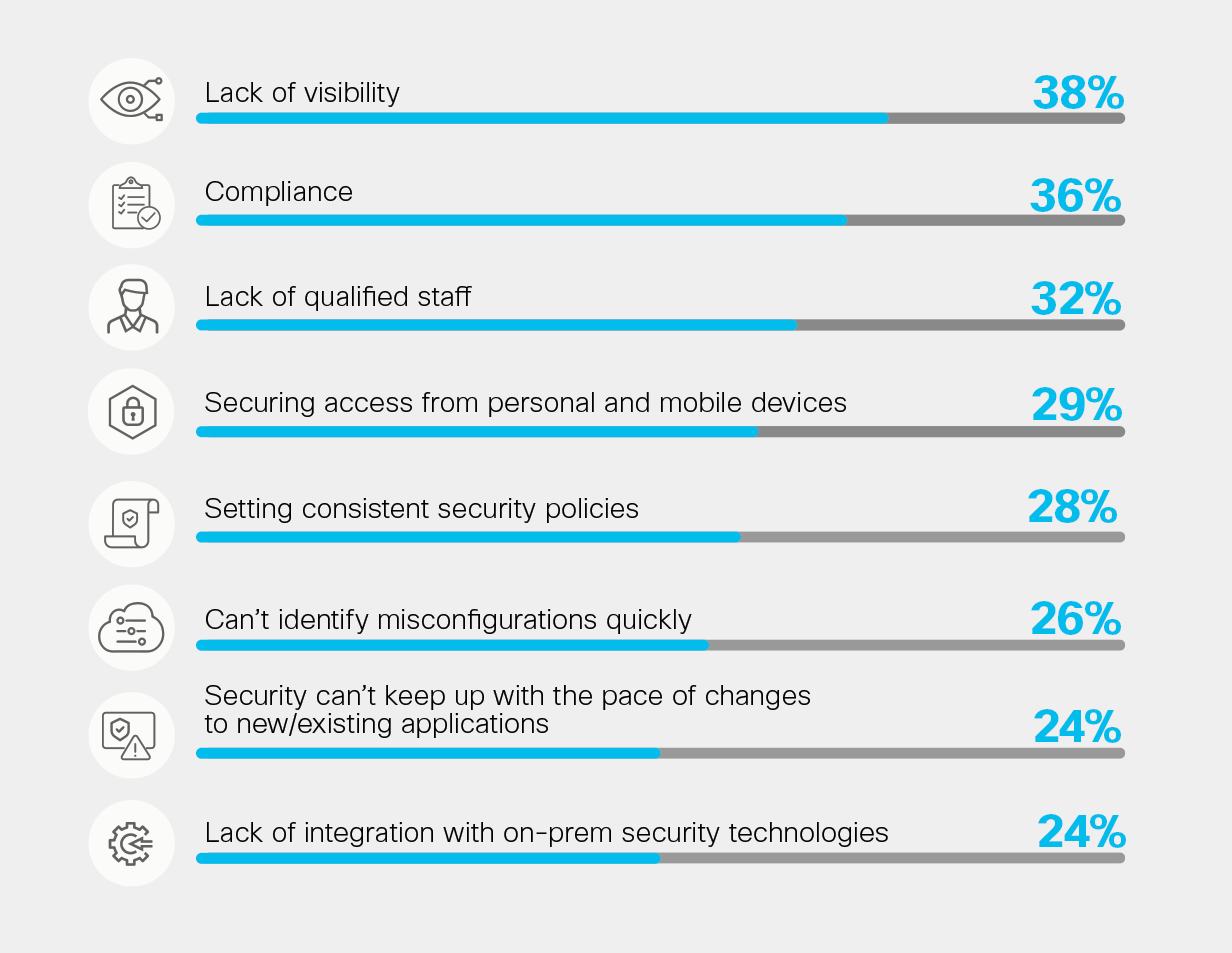
What are your biggest operational, day-to-day headaches trying to protect cloud workloads?

Cybersecurity professionals are faced with numerous day-to-day operational challenges when it comes to protecting cloud workloads. Lack of security visibility tops the list (38%), followed by compliance requirements (36%) and the perennial lack of qualified security staff (32%).

Source: 2022 Security Visibility Report produced by Cybersecurity Insiders

OVERVIEW

To address these security challenges, BlueCat Edge offers a robust Protective DNS solution that provides Lack of feature parity with on-prem security solution 17% Securing tra•c •ows advanced visibility, control, and detection capabilities for DNS queries. By capturing detailed DNS query data, it enables network and IT teams to establish 14% smarter policies, optimize traffic, and meet stringent compliance requirements while enhancing the overall security posture through intelligent threat detection and response capabilities, leveraging detailed DNS data for comprehensive protection and analysis.
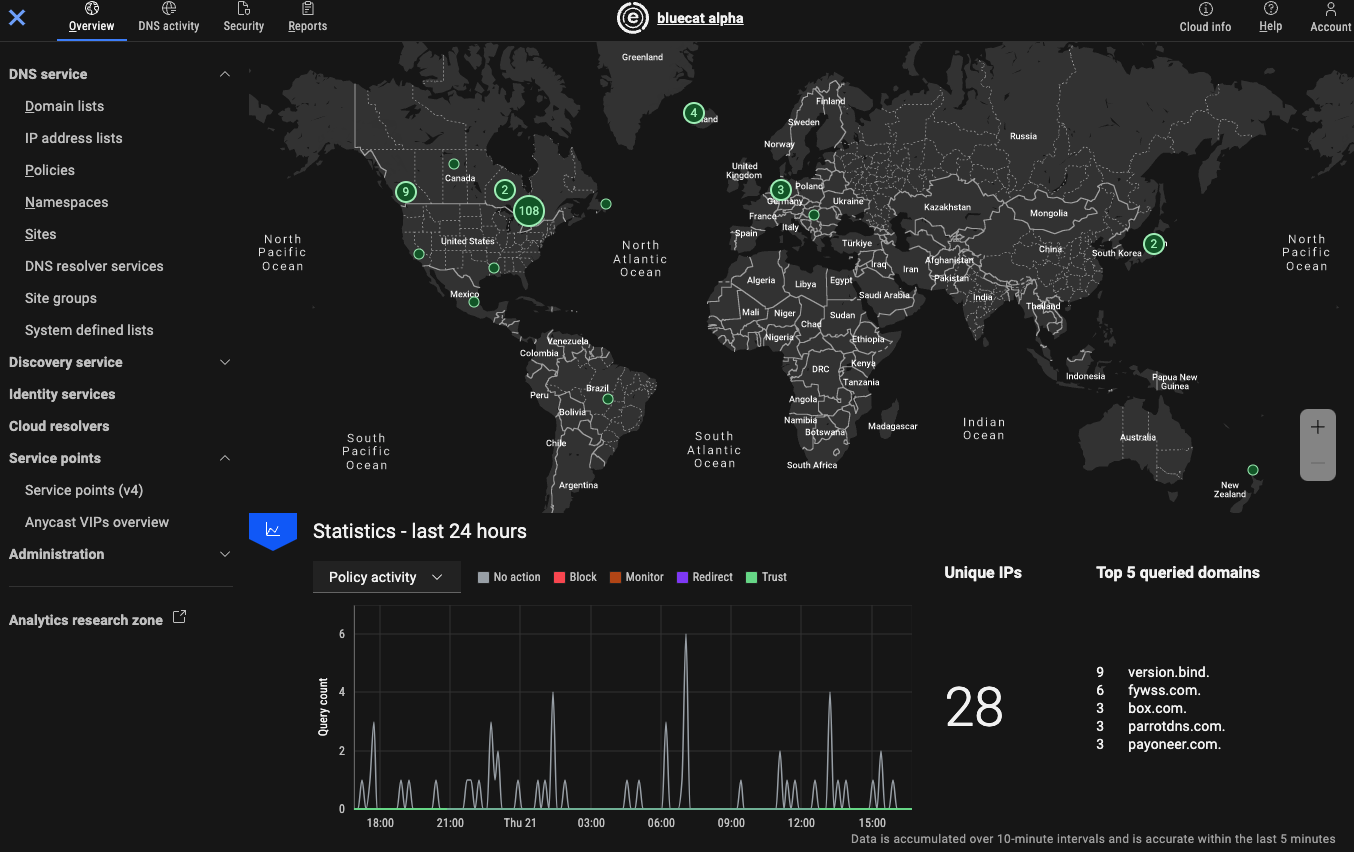
Bluecat Edge adds a much-needed layer of visibility, control,  and detection for corporate DNS

To accomplish this, Edge captures all DNS queries and their associated responses, providing deep, actionable insights into network traffic and resource usage. This detailed DNS data supports threat hunting and investigations, enhancing existing security measures. Serving as the initial hop for all DNS queries, Edge acts as a robust security layer by identifying and blocking malicious queries using threat feeds, security-defined block lists, and its flexible policy system. This capability not only bolsters security but also optimizes network performance and compliance.

KEY FEATURES

Edge offers a comprehensive suite of features designed to enhance DNS security and performance: 

•DNS Threat Protection: Utilizes advanced threat feeds, DGA and Tunneling algorithms to rapidly identify and stop DNS threats before they reach critical applications or data.

•Identity Security Service: Enriches DNS data with user identities to enable faster investigation and remediation of security threats.

•Edge Security Dashboard: Provides a detailed view of the network’s security health, highlighting the most compromised or vulnerable endpoints.

•Cisco Umbrella Integration: Delivers enhanced context and actionable data for threat identification and mitigation.

•Comprehensive Logging and Reporting: Collects and analyzes DNS query data for diagnostic and investigative purposes, integrating with SIEM solutions for enhanced threat hunting.

•Zero-Touch Deployment: Allows the deployment of unlimited virtual service points without changes to existing DNS infrastructure.

•Policy Configuration: Enables the creation and application of policies to block, redirect, or monitor DNS requests based on security requirements.

KEY BENEFITS

Edge provides several key benefits that significantly enhance DNS security and performance:

1.Enhance Your Security Stack:  Utilize detailed DNS data on the sources and targets of network traffic to bolster your security stack.

2.Protect Against DNS Attacks:  Actively monitor and protect your organization against DNSspecific threats such as tunneling and hijacking. Implement granular security policies based on comprehensive query insights.

3.Gain Unprecedented Visibility & Control:  Receive complete visibility into DNS traffic from the first hop of any DNS query, down to the individual endpoint IP address, allowing for granular, intelligent traffic management and security policies, threat detection in internal and external queries, blocking of malicious DNS queries, and effective diagnostics and investigation.

4.Optimize Network Performance:  Improve DNS resolution paths and reduce latency, ensuring high network availability and resilience with seamless cloud and onpremises integration.

5.Streamline Threat Hunting:  Integrate with SIEM solutions for advanced threat analysis and hunting, enhancing security team collaboration and efficiency.

INTEGRATION WITH CISCO UMBRELLA

Network operations and security teams face significant challenges in correlating endpoint threats that move laterally within the network. To address these challenges, Edge integrates seamlessly with Cisco Umbrella, capturing rich DNS data and contextualizing it to provide critical insights into suspicious endpoint activity. This integration allows teams to connect North-South and EastWest traffic effectively, answering the essential questions in network security: Who, What, When, and Why. This powerful combination enhances threat detection and response, ensuring robust and comprehensive network security.

DEPLOYMENT AND PRICING 

Edge is delivered as a cloud service under the Software as a Service (SaaS) model. Deployment is quick and efficient; using automation tools such as Terraform, the infrastructure can be set up in minutes for hybrid and multicloud environments. The creation of policies, configuration of threat feeds, and integration with Cisco Umbrella can be completed swiftly through the user-friendly GUI.

Commercially, Edge starts with the Smart Cache package, offering basic functions and weekly reporting. Advanced capabilities for security, networking, and cloud can be unlocked through add-ons. Pricing is subscription-based and varies according to the number of active IP addresses, with data retention options available for up to one year.

CONCLUSION

Edge stands out as a robust solution for addressing the multifaceted challenges of DNS security. With its comprehensive suite of features, including advanced threat protection, identity security services, and seamless integration with Cisco Umbrella, Edge offers unparalleled visibility and control over DNS traffic. It excels in optimizing network performance, streamlining threat hunting, and ensuring high availability through zero-touch deployment. 
BlueCat Edge provides advanced threat protection that also blocks malicious queries—so threats never get close to your critical systems.  Watch the video.

These capabilities collectively enhance an organization’s overall security posture, making Edge an exceptional choice for securing and managing network infrastructure efficiently and effectively.

The post BLUECAT EDGE FOR COMPREHENSIVE PROTECTIVE DNS appeared first on Cybersecurity Insiders.


January 06, 2025 at 01:19PM

Sunday, January 5, 2025

From Shadows to Spotlight: Addressing the Hidden Dangers of Dormant Service Accounts

A silent threat lurks beneath the surface in today’s enterprise systems: dormant service accounts. These automated, non-human identities, inactive for 90 days or more, represent one of an organization’s most overlooked yet dangerous security vulnerabilities. And they’re everywhere. For every human user in your organization, 40 connected non-human identities operate in the background, many of them forgotten, undocumented, and retaining dangerous levels of access.

These dormant accounts have become prime targets for sophisticated attackers. As one CISO recently confided, their organization discovered a 34-year-old service account created by an employee long since retired—with credentials that could still access critical systems. This isn’t an isolated incident. A staggering 76% of organizations misuse service accounts, and approximately 90% of successful breaches leverage these vulnerable identities.

As organizations rush to embrace AI transformation, the complexity of managing service accounts grows exponentially. In this new reality, attackers don’t need to hack in; they simply log in, exploiting these forgotten digital identities that serve as perfect camouflage for malicious activities. Legacy security tools can no longer keep up. Organizations require dynamic, real-time threat detection and prevention capabilities that can anticipate and neutralize risks before they manifest.

How Dormant Service Accounts Take Root

Service accounts become dormant through a combination of organizational challenges. They’re created for specific projects, automated tasks or system integrations—but as teams change, applications evolve, and documentation lapses, these accounts often outlive their original purpose. Without clear ownership or regular audits paired with continuous monitoring solutions, they risk becoming digital artifacts, forgotten but not powerless.

The problem compounds over time. Organizations stack new technologies and migrations on top of legacy systems, creating layers of technical debt. A point-of-sale system might retain service account credentials from a decade ago. Development teams may create thousands of service accounts in rapid succession, bypassing standard security protocols. Each instance adds to an expanding attack surface that becomes increasingly difficult to monitor and control.

The most dangerous aspect of dormant accounts is their retained privileges. Unlike human accounts, which typically require multi-factor authentication and regular password updates, service accounts often maintain static credentials and elevated access rights long after their legitimate use cases expire. This makes them particularly attractive to attackers—they’re both powerful and poorly protected.

Why Dormant Accounts Are Ideal Attack Vectors

Most organizations rely on static scanning tools to detect threats, but these tools fundamentally misunderstand the dynamic nature of service accounts. A malicious actor can exploit a dormant account in seconds—activating at 1 a.m., executing privileged commands, and vanishing by 1:01 a.m. Modern problems require modern solutions; traditional security measures would’ve never seen it happen until it is too late.

The access chains these accounts participate in create additional risk. A single compromised service account might connect to multiple systems—from cloud services to critical databases. For example, organizations have experienced breaches through decade-old point-of-sale credentials. Other vulnerabilities stem from service accounts with unconstrained delegation rights that were never properly managed.

Making matters worse, standard security controls like multi-factor authentication can’t be applied to service accounts. As automated entities, they can’t respond to authentication prompts or prove their identity the way human users can. This limitation, combined with poor documentation and monitoring, makes dormant service accounts an attacker’s ideal target—invisible keys to the kingdom.

The Compounding Crisis 

The scale of the dormant service account problem is growing exponentially. Tech Target’s Enterprise Strategy Group forecasts a 24% increase in non-human identities over the next 12 months alone. This surge comes as organizations rapidly adopt cloud services, APIs, and automated workflows—each requiring its own set of service accounts.

The complexity is particularly acute in hybrid environments where on-premises and cloud systems intersect. Service accounts exist in multiple forms—traditional service accounts, managed identities, API keys and tokens—each with associated access patterns and risk profiles. Without proper monitoring, organizations can’t track how these identities interact or what systems they can reach.

Regulators are taking notice. There’s a fundamental shift occurring in how these identities are viewed from a compliance perspective. Rather than treating human and non-human identities separately, emerging regulations are beginning to classify all authenticating entities under a single framework. This regulatory convergence means organizations must apply the same rigor to managing service accounts as they do to human users—a requirement many are unprepared to meet.

Modern Approach to Mitigation

Service account vulnerabilities represent a significant danger that organizations can no longer afford to ignore. In an era where AI amplifies attack capabilities and nation-state threats are prominent, these dormant identities offer adversaries an ideal pathway into critical systems.

Begin with a rapid assessment to understand your exposure. Don’t assume you know the full scope of your service account landscape—in one recent assessment, an organization discovered their attack surface was 193% larger than they had estimated. This is not uncommon; most organizations discover they’re significantly more vulnerable than they realized. Focus on high-risk areas: accounts with access to essential assets, those with elevated privileges, and those in critical business systems. Then implement solutions that provide:

  • Instant visibility into service account ecosystems
  • Real-time anomaly detection
  • Predictive threat intelligence
  • Automated risk mitigation capabilities

The regulatory landscape is shifting toward treating all authenticating entities—human and non-human—under a single framework. Organizations that proactively address their service account vulnerabilities now will be better positioned as compliance requirements evolve.

The tools and technology exist today to solve this problem efficiently. Modern streaming-based, AI-driven solutions can provide immediate, comprehensive visibility into your service account exposure without requiring agents or complex deployments. The question isn’t whether to act but how quickly you can begin reducing this critical attack surface.


The post From Shadows to Spotlight: Addressing the Hidden Dangers of Dormant Service Accounts appeared first on Cybersecurity Insiders.


January 06, 2025 at 11:58AM